
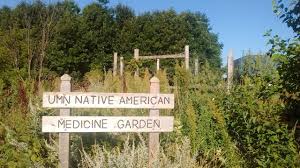
Every week in the summer groups of people gather at the Native American Medicine Garden the University of Minnesota in the Twin Cities. They come to talk about indigenous knowledge of plants and the ecosystem here. Reporter Melissa Townsend recently got her own lesson from the garden’s caretaker, Francis Bettelyoun.
Transcript
Every week in the summer groups of people gather at the Native American Medicine Garden the University of Minnesota in the Twin Cities.
They come to talk about indigenous knowledge of plants and the ecosystem here. Reporter Melissa Townsend recently got her own lesson from the garden’s caretaker, Francis Bettelyoun.
It’s been a wet and windy day in St Paul. Dark clouds are traveling across the sky.
MELISSA: Well, why we’ve got it dry for a minute, do you want to walk me around a little bit?
FRANCIS: Sure. I’ll introduce you to the garden… (:20)
The Native American medicine garden is a plot of land in the middle of many plots of land that are all part of the University fo Minnesota campus in St Paul. Each plot is a research experience conducted by researchers a the University.
FRANCIS: When people come out to this garden, I make sure this is the first thing we talk about - is the land we’re on. So this is Dakota Treaty land. It is still their land- the sacred land of the Dakota. So that’s how I approach it. (:26)
His approach has made this garden very different from the other plots of land here. The plot next door is covered with rows and rows of soybeans planted in flat brown dirt. In the corner of the plot there’s a green garden hose for watering.
[ambi]
The medicine garden is lush and crowded with a wide variety of tall plants - most of them tower over my head - and there are a few juvenile trees. Sage, sweet grass, milkweed, sunflowers, and a number of other species native and non-native are working together here.
FRANCIS: Anywhere between 75 and 100 different perennial species in the garden right now along with corn, squash, green beans, tomatoes, peppers, all those common annual vegetable plants. (:15)
Francis is Oglala Lakota and he says he approaches the garden in a traditional way.
FRANCIS: So when I first came here in 2005, the first thing I did and through my culture I learned this - especially through my Great Grandmother - is that you look and listen, mainly listen. And I’m a landscape designer by schooling so my first thoughts are sometimes - this is how it’s going to be, this is the design. (:24)
He says it can be hard to stop himself from planning and remember to listen.
FRANCIS: But also recognizing that I can still be part of that design. (:05)
When Francis first started working in the garden, he knew he needed to change the soil back to what he says it was before western agricultural practices stripped layers of top soil and minerals away. He tilled the soil and then added a layer of compost 3-4 feet thick and then he mixed in rock dust to add minerals. Francis says because of all that work, he hasn’t watered out here in over 7 years.
FRANCIS: The reason is because the soil is healthy now and she continues to get healthier and stronger each day. (:09)
He has a plan to propagate even more Native species here.
FRANCIS: My vision was to bring back the indigenous perennials that we ate because our food source right now, we are dependent upon others to feed us and it’s unhealthy food, most of it. (:14)
As much as he wants to grow food to feed people, he says he won’t sew those seeds until he knows that the garden is definitely staying put.
FRANCIS: If this area was taken away from us, I didn't want to introduce those relatives and have them killed. (:08)
The Native American Medicine Garden at the U is part of the University’s College of Food, Agriculture and Natural Resource Sciences or CFANS. Indication is that they support the work Francis and others are doing here. But Francis says currently there are no guarantees that that will continue.
I reached out to a Dean at CFANS, Craig Cuomo and he wrote in an email - land on campus is at a premium. He says, “Faculty don’t have a promise to have the same site or the same amount of land from year to year.” He says, “…To date, we have mostly been able to manage and make things fit. But they have no promise moving forward.”
For now Francis Beltyoun says he’ll continue to take care of these plants and engage the community here in understanding traditional Lakota ways of growing food - which is the first medicine.
For Minnesota Native News, I’m Melissa Townsend.