
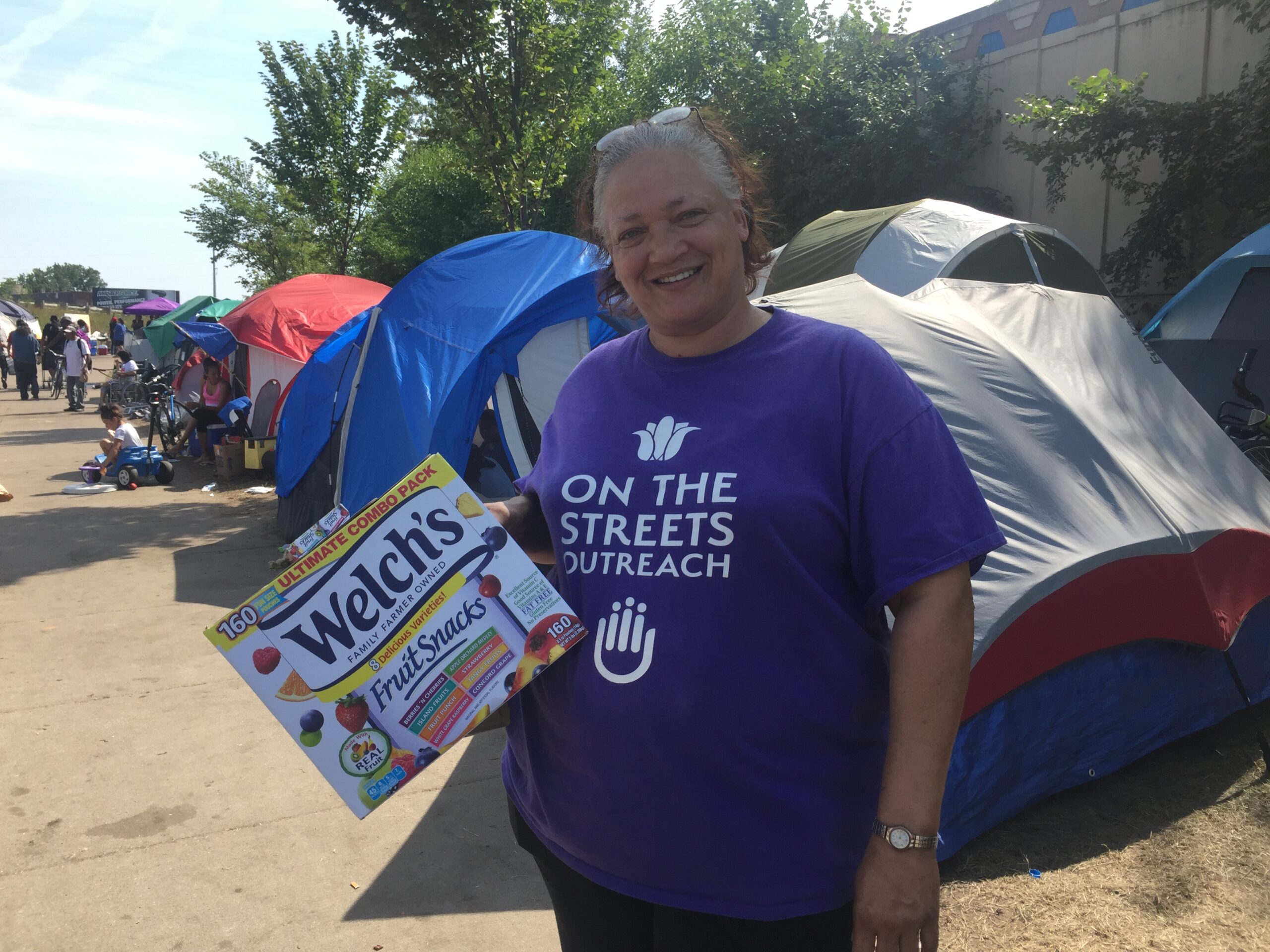
This week reporter Melissa Townsend has the latest on a homeless tent camp in Minneapolis. There are roughly 300 people – mostly Native – in the camp. Some are calling it “The Wall of Forgotten Natives”.
Transcript
This week reporter Melissa Townsend has the latest on a homeless tent camp in Minneapolis. There are roughly 300 people - mostly Native - in the camp. Some are calling it “The Wall of Forgotten Natives”.
[CAMP AMBI]
MELISSA: Linda Eaglespeaker is a Blackfeet elder who works with the Minnesota Indian Women’s Resource Center in Minneapolis.
EAGLESPEAKER: When I first heard about these camps, there were only 5 tents then. And so now it’s population has climbed up to 300 people. I came walking over. As I went through and I talked to all the familIes as I’m coming along, their number one fear is their fear of being here at night. Because the way this camp is set up is that on this side closest to the Indian Center and Wakiagan, you’ve got all the families and healthy families, and then you have all the single adults that are working and who are trying really hard, but at the other end of the camp you’ve got all those who are addicted to every kind of drug you can imagine. And at night time when we go away, they come out to play. (1:09)
[ambi of camp]
On one end of the camp two young girls are playing with dolls in a cardboard box near an elder woman sitting in her wheelchair and younger adults standing talking. At the other end of the camp it’s mostly young men and women - no elders, no children. I saw one person in a tent filling a syringe. Two people have died here in the past few weeks. One woman reportedly from an asthma attack. One man from causes not yet made public.
JOY: Fruit snacks? Fruit snacks! … (:02)
Joy Friedman walks through the tents handing out snacks. She’s an outreach worker also with the Minnesota Indian Women’s Resource Center. At the Center’s headquarters she runs support groups for women who have left abusive relationships.
She’s here to connect with her relatives and begin conversations about getting helpful services. But she says when folks decide they do want help - it’s getting harder and harder to find it.
JOY: Like I said I used to be an individual who slept on the streets and wherever I could and ate out of trash cans. And it’s like the services I had then, are no longer here now. So that makes it even less. I can get a girl a Rule 25 today but she has to wait 4-6 weeks for a bed. (:18)
A rule 25 is the first step to getting into a drug treatment program. A bed would be in an in-patient treatment facility.
JOY: Shelters - I can’t even get them in shelters right now. They’re full. domestic violence shelters? They’re full, around Minnesota - so this is not just here. (:11)
It’s in this landscape of scarce resources that Minneapolis mayor Jacob Frey has committed to partnering with tribes and urban Native leaders to create housing for everyone at this camp before winter.
[city council ambi]
The City Council Housing Committee met on September 12th to talk about a short term plan to do that. In the next 3 weeks — yes 3 weeks! - city council plans to find a site and build a temporary structure to house services and beds for those in the camp.
It would be called a Navigation center — to steer people into support services and long term housing.The location is unclear but Metro Native leaders want that site to be near the Native American cultural corridor. What’s also unclear is — who going to pay for it.
At the city council meeting, Councilmember Lisa Goodwin spoke up:
GOODWIN: I don’t see any leadership from the county here. We don’t have the deepest pockets and we should hold our colleagues at other levels of government accountable for stepping up. (:08)
Councilmember Alondra Cano didn’t necessarily disagree with her. But she did add …
CANO: I don’t want to kick the can to the county, I don’t want to kick the can to the schools or to MPHA, I want to be held responsible for the power and the position and the responsibility that we have here today. (:12)
The two women then shared some tense words off mic.
[camp ambi]
Back at the camp Linda Eaglespeaker - elder with the Minnesota Indian Women’s Resource Center is walking through the tents with a person from the county’s housing services.
Linda took her to 5 specific families.
I interviewed the county worker who was with Linda Eaglespeaker. But they later told me they didn’t want to go on the record because the situation was becoming more political than they had realized.
Linda Eaglespeaker is among those who hope a game of political football doesn’t leave homeless Native American families out in the cold.
EAGLESPEAKER: I’m going to come through in the next couple of days and I want to see those tents gone. (:06)
For Minnesota Native News, I’m Melissa Townsend.