
• Skip to main content
  • Skip to header right navigation
  • Skip to site footer
Ampers logo

AMPERS

Minnesota's Community Radio Stations

  • Our Programs
    • All Programs
    • North Star Stories
    • NSS Daily Headlines
    • MN90: Minnesota History in 90 Seconds
    • Minnesota Native News
    • Native Lights: Where Indigenous Voices Shine
    • Veterans’ Voices
    • Minnesota’s Legacy
    • Keep Moving Forward
    • Take Control of Your Health
    • U.S.-Dakota War of 1862
  • About Us
    • Who is AMPERS?
    • Staff & Board
    • Governing Policies & Finance
    • Press Room & Media Relations
    • Arts & Cultural Heritage Fund
    • Awards
    • Scholarships
    • Jobs & Opportunities
  • Our Stations
  • Our Supporters
  • Contact Us
  • Donate

MN90: Minnesota History in 90 Seconds
on January 19, 2024

FacebookTweetLinkedInEmail

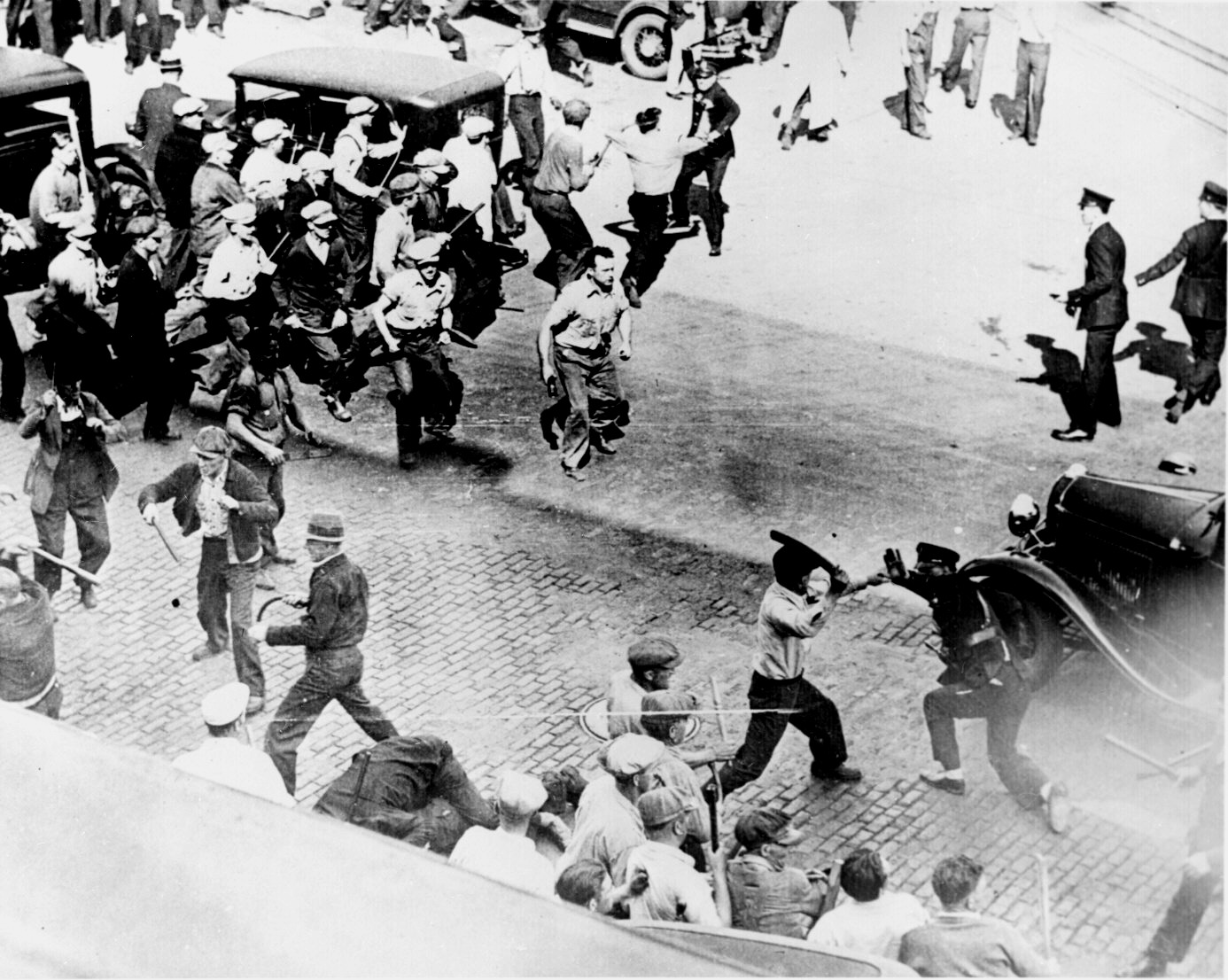
Bloody Friday

Home > MN90: Minnesota History in 90 Seconds > Bloody Friday

One day stands out amidst the general strike of 1934 filled with Police brutality and lives lost. 

—–

Producer: Autumn Haeg

Editor: Britt Aamodt

Editorial support: Emily Krumberger

Mixing & mastering: Chris Harwood

—–

For the latest episode drops and updates, follow us on social media. 

instagram.com/ampersradio/

Facebook.com/MN90Ampers

Never miss a beat. Sign up for our email list to receive news, updates and content releases from AMPERS. ampers.org/about-ampers/staytuned/ 

This show is made possible by community support. Due to cuts in federal funding, the community radio you love is at risk. Your support is needed now more than ever. Donate now to power the community programs you love: ampers.org/fund


Transcript

MN90 Intro: Welcome to MN90: Minnesota History in 90 Seconds.

Bloody Friday took place on July 20, 1934. Work for truck drivers in Minneapolis was sparse and workers organized themselves into Local 574 of the Teamsters Union to demand better wages and working conditions. After failed negotiations, the union called for a strike targeting the city's market district companies, which dealt in perishable produce. But the market district companies refused to negotiate. On Bloody Friday, police blocked off an area and provided escort to trucks loading merchandise. When a truck carrying picketers blocked their path, the police opened fire with shotguns, leaving many strikers wounded and two deaths, John Beller and Henry Ness. Governor Floyd B. Olsen ordered an investigation, which revealed that the police had taken direct aim at the picketers and fired to kill, even though the picketers posed no threat and were unarmed. This brutality fueled public outrage, and thousands of people attended Henry Ness's funeral procession, demanding justice and the firing of Police Chief Michael Johannes. Pressure from President Roosevelt and his administration eventually led to a new settlement and the end of the strike.

MN90 Outro: MN90 is produced by AMPERS, diverse radio for Minnesota's communities, made possible by funding from the Minnesota Arts and Cultural Heritage Fund. Online at mn90.org.

AMPERS logo in black
  • Facebook
  • Instagram
  • LinkedIn
  • YouTube

Teacher Resources
Accessibility
Copyright policy
Privacy policy
Terms of use

Funding for arts, cultural, and historical programs on this site is made possible by the Minnesota Arts and Cultural Heritage Fund and the citizens of Minnesota. For more information about Ampers’ Arts and Cultural Heritage Fund (Legacy) programming click here.

Copyright © 1972–2026 Association of Minnesota Public Educational Radio Stations. All rights reserved.

The Association of Minnesota Public Educational Radio Stations (AMPERS) is a registered 501(c)(3) nonprofit. EIN: 41-1388406