
A Minnesota Mayor faces felony theft charges. Then, why a Minnesota grassland feels quieter. And, the state wants to hear from the Latine community.
—–Executive Producer: Victor Palomino Producer: Maija HechtAnchor: Chantel SinGsReader scripting: Joel Glaser, Victor Palomino Fact checking: Joel Glaser, Victor Palomino Editorial support: Emily Krumberger Mixing & mastering: Chris Harwood
Transcript
[sound element: NSS intro theme]
HOST: You're listening to North Star Stories: Voices from Where We Live, a daily newscast about what it means to live in Minnesota.
ANCHOR: Today, a Minnesota Mayor faces felony theft charges. Then, why a Minnesota grassland feels quieter. And, the state wants to hear from the Latine community.
I'm Chantel SinGs.
A mayor of a small town in Northern Minnesota is accused of using his knowledge to avoid paying fees for a second water line on his property for more than ten years. According to AMPERS station KAXE, the mayor of Keewatin now faces felony theft charges. Authorities say that as a former city crew supervisor, the mayor knew how to turn the water on and off on his own for the second part of his double lot. Normally, a resident would have to pay one hundred dollars every time the city turns the water on or off, plus an additional ten dollars a month. The mayor denies the allegation, saying the city is at fault for failing to bill him. The case is scheduled to go to court in October.
In today's main story, half of all grassland birds have disappeared in the last 50 years. In Minnesota, researchers are working with landowners to understand why. Maija Hecht has more.
Maija Hecht: Seasons may not sound the same as they used to. Human-caused destruction of bird habitat in Minnesota and beyond means that as our landscapes change, bird populations and the sound of outdoor spaces are changing with them.
Mike Worland: Bird populations as a whole have declined by 30% in the last 50 years.
Maija Hecht: Mike Worland is a wildlife biologist with the Department of Natural Resources.
Mike Worland: For grassland birds, specifically, it's 50% in the last 50 years. So their populations have been cut in half within my lifetime.
Maija Hecht: This statistic, pulled from recent research by the American Association for the Advancement of Science, indicates large-scale ecosystem disruption beyond just bird populations.
Mike Worland: Huge forces are at work causing these population trends and overcoming them is not a small thing.
Maija Hecht: Those forces include everything from climate change to pesticide use to human infrastructure development. In exchange for our modern human habitats, birds are losing theirs. One such habitat is Minnesota's native oak savannah.
Dayna Burtness: It's a unique ecosystem. It's beautiful.
Maija Hecht: Dayna Burtness runs Nettle Valley Farm in southeastern Minnesota's driftless region, a biodiversity hotspot, historically characterized by open prairie dotted with large oak trees.
Dayna Burtness: When we first bought our farm, it was a lot of clogged woods, just full of invasive species. And we're slowly but surely nudging it back towards more of an oak savanna silvopasture system.
Maija Hecht: Silvopasture is a technique that integrates trees and livestock on the same land, helping the ecosystem become--
Dayna Burtness: One that functions for birds and wildlife and insects but also can be grazed by livestock. And as soon as we started doing that, we started seeing a lot more red headed woodpeckers on our land
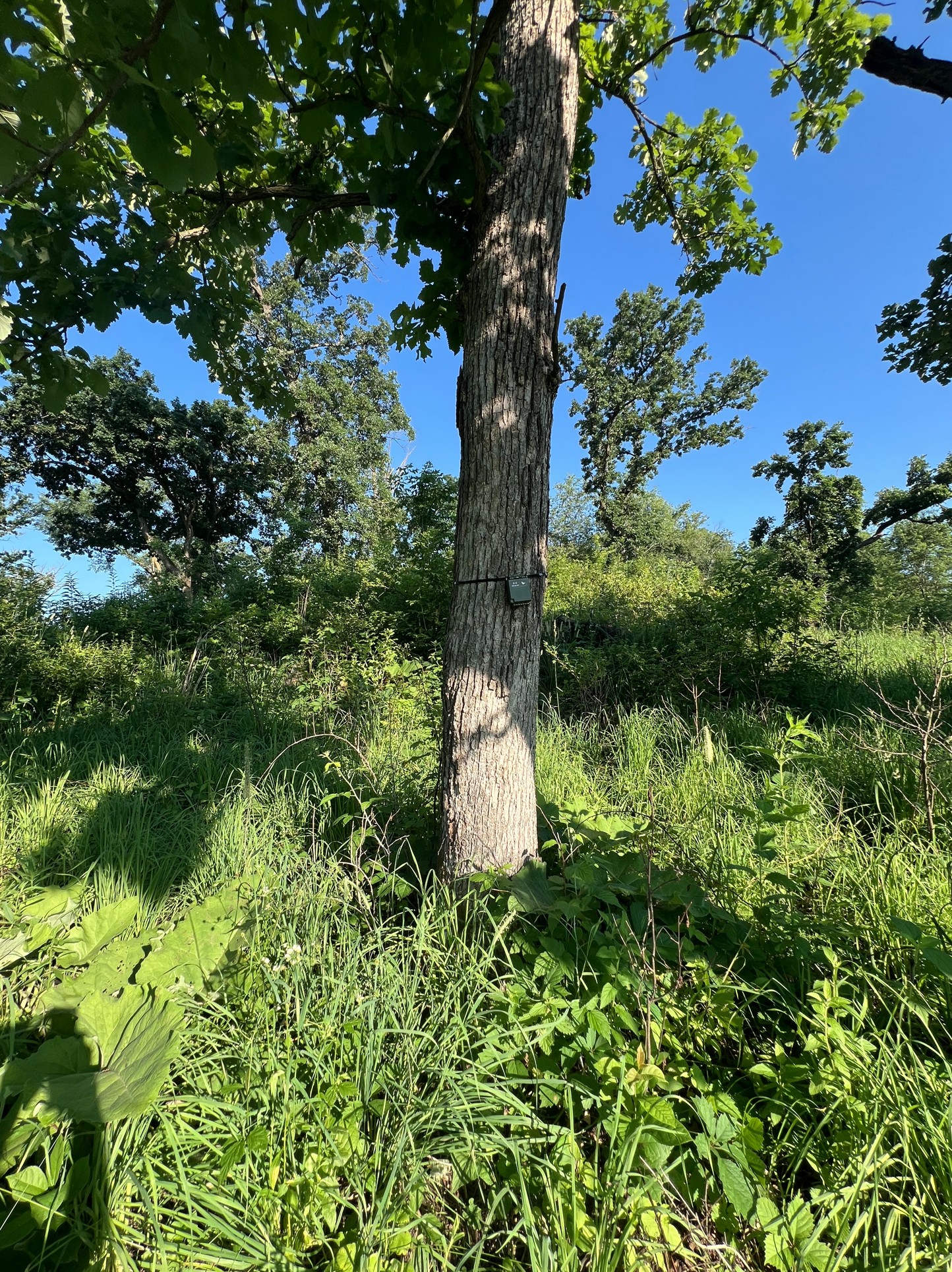
Maija Hecht: Earlier this year, Dayna's farm participated in the University of Minnesota's Sounds of Nature project.
Dayna Burtness: We wanted to be part of the citizen science project because who knows? Maybe that would help get more answers about why that is.
Maija Hecht: The birdsong heard on her land and many others across the state was recorded into a data set seeking to compare avian populations across public and private lands.
Dayna Burtness: The interventions that we're doing in our valley, from my perspective, has increased the amount of life in the valley, but it would be kind of neat to have that data.
Maija Hecht: The Sounds of Nature project recently completed its pilot data collection season.
Mike Worland: This new technology of using recorders to monitor birds, I think, has huge potential.
Maija Hecht: And that potential depends on public involvement. Biologist Mike Worland said--
Mike Worland: One thing I really like about it is engagement with citizens. That's a huge benefit just getting people engaged in birds and in conservation.
Maija Hecht: Maya Hecht for North Star Stories.
ANCHOR: You are listening to North Star Stories.
The Minnesota Council on Latino Affairs, or MCLA, is surveying Latine communities across the state. The survey seeks input from all Latines living in Minnesota, regardless of citizenship status, language, or age. The Council is working with a state agency that is required to protect data privacy. And, no identifying information will be collected or shared. The goal is to use this information to advocate for policies, programs, and funding for Latines in the state. Recommendations will be shared with government leaders and state agencies. The survey is open through November 30 and can be found at the MCLA website.
[sound element: NSS outro theme]
HOST: North Star Stories is produced by AMPERS, diverse radio for Minnesota's communities, with support from the McKnight Foundation and the State of Minnesota. Online at ampers dot org.