
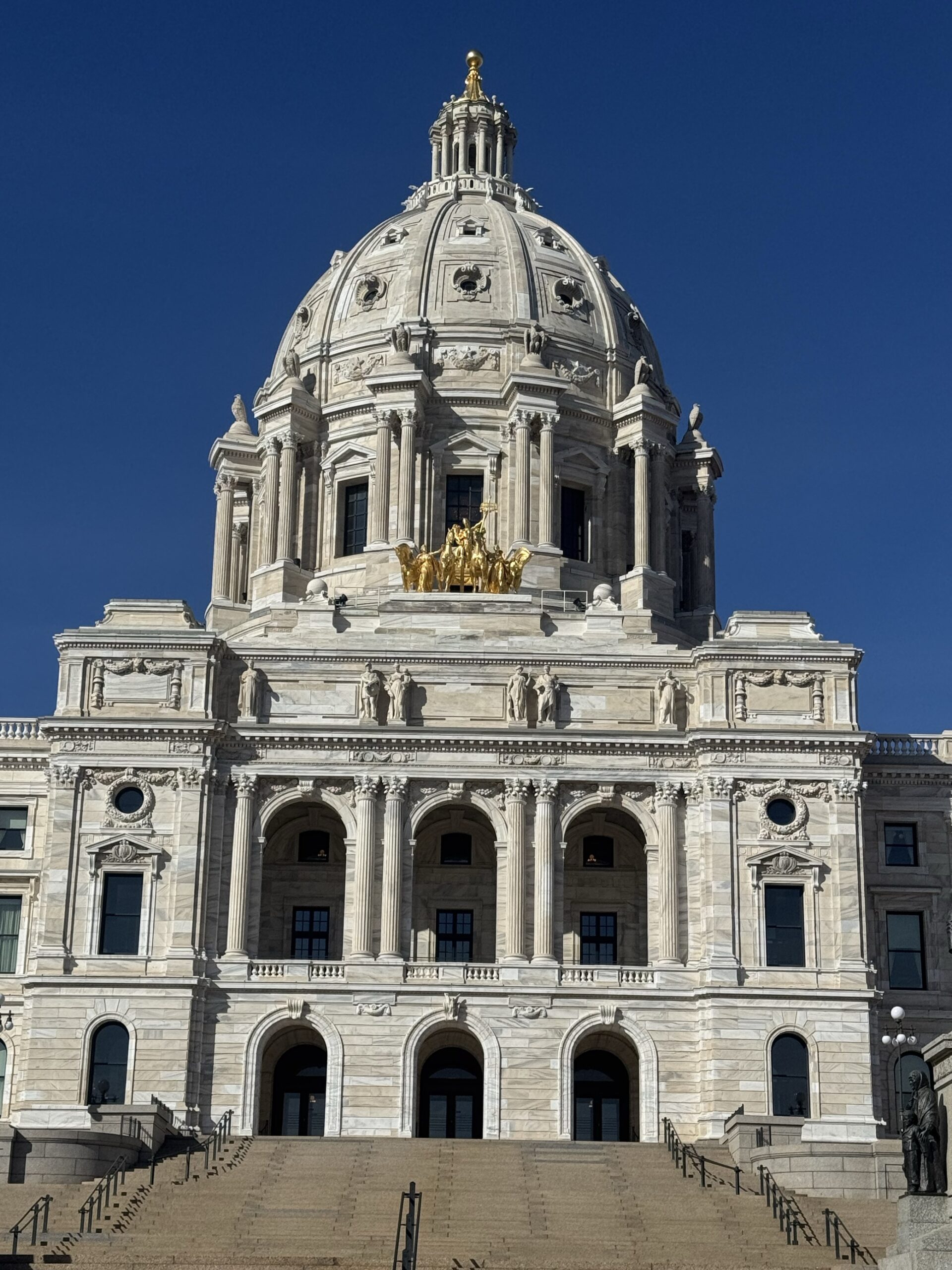
In Minnesota, a proposed bill would ban cellphone use in classrooms in grades K-8 while regulating it in 9-12. In this segment, Jamad Jama interviews Senator Alice Mann, alongside a middle school student, and a teacher to take a look into varying perspectives and how this legislation could affect students’ learning, performance, and daily lives.
Transcript
[sound element: NSS intro theme]
HOST: You're listening to North Star Stories: Voices from Where We Live, a daily newscast about what it means to live in Minnesota.
ANCHOR Gracie J: In today's segment, a warning to protect your DNA and ancestral information. And: should students have cellphones in Minnesota classrooms? What some lawmakers, teachers, and students think. Plus, why a new passenger train may never leave the station. I’m Gracie J.
Minnesota’s Attorney General, Keith Ellison is urging anyone who has used 23 and Me to take action to protect their privacy. The company recently filed for bankruptcy following a 2023 data breach that exposed the personal and genetic information of nearly seven million people. The bankruptcy leaves the future of your genetic data and who will own it up in the air. Attorney General Ellison says that if you’ve ever used 23 and Me, you should delete your account and secure your data as soon as possible.
Next, some Minnesota lawmakers want to ban cellphones in classrooms. While some support the idea, others are unsure it’s the right call. Reporter Jamad Jama has the story.
[sound element: NSS transition music]
Jamad Jama: A proposed policy for Minnesota schools is aiming to ban cellphones in K-8 classrooms, while restricting them in high schools. From the Capitol to classrooms across the state, students, teachers, and legislators are seeing the proposal differently.
Alice Mann: We decided to go across the state of Minnesota and listen to kids, teachers, parents, administrators, and we heard the same thing from every single school district, and that that schools were very much impacted by cell phone use and that cell phones were indeed distracting.
Jamad Jama: Senator Alice Mann, a Democrat representing Edina, says that removing cell phones from classrooms would do overwhelming good for both students and schools.
Alice Mann: And Several kids mentioned cell phones, and they mentioned how cell phones are distracting them, and causing issues at school. Keeping them from concentrating- causing, you know, social issues and mental health issues in schools. And so we dug into that.
Jamad Jama: The bill would allow for high school students to use cellphones during passing time and for emergencies. There's also an exception for students with disabilities. But, many legislators and teachers believe the separation would help students commit to learning.
Alice Mann: How it's done is up to each individual school district. We know at the end of the day, that a cell phone free learning environment is absolutely without a doubt the best environment for our kids.
[sound element: Sounds of a school bell ringing and student chatter]
Maryam Abdullahi: I notice that unless you have some way to distract them, the phones always win. Sometimes, it's like a reflex, they’ll just lean in and grab it, you can see them tuning out and they get kind of lost in it.
Jamad Jama: As a teacher at Valley View Middle School, Maryam Abdullahi recognizes that constant access to technology can be a problem when it comes to students' social lives.
Maryam Abdullahi: Part of school isn’t just the learning of content, it's how you communicate and interact with people around you, that you like, or dont like, and so those skills are harder to develop because of their need to deal with people online versus in person.
Jamad Jama: On the other hand, some students are on the fence. One, who asked to remain anonymous for privacy reasons, says, technology is a tool for learning.
Sounds of a pencil writing
student: I’ve been in this school district all my life, and I have some pretty mixed opinions on phones in school. Nowadays a lot of our assignments and projects are all digital, so phones can be really helpful for that.
Jamad Jama: Some Students also feel like phones are a needed way to communicate with their parents during the day. Cellphones can also be useful in emergencies or as a form of collecting evidence against inappropriate behavior.
student: Personally, I use my phone to stay connected to my parents- A lot of my friends feel like they need to have their phone on them because in emergencies like a lockdown, they're anxious about not being able to contact their parents.
[sound element: NSS transition music]
Jamad Jama: Currently, the bill is still in progress at the capitol, but the idea has sparked up a conversation on how best to navigate technology in schools. With varying perspectives, there's a lot to consider based on student needs and learning.
For North Star Stories, I’m Jamad Jama.
[sound element: NSS transition music]
ANCHOR Gracie J: You are listening to North Star Stories.
A partially funded passenger train line connecting Duluth to the Twin Cities might get derailed before it ever gets on track. A bill going through the legislature would eliminate funding for the Northern Lights Express and redirect the money to state highways. The bill’s author points to the state’s budget deficit and possible cuts in federal funding. The state had set aside nearly 2-hundred million dollars for the project in 2023. The total cost is expected to be three times that. The original plan called for federal funds to cover the bulk of the costs.
[sound element: NSS outro theme]
HOST: North Star Stories is produced by AMPERS, diverse radio for Minnesota's communities, with support from the McKnight Foundation and the State of Minnesota. Online at ampers dot org.