
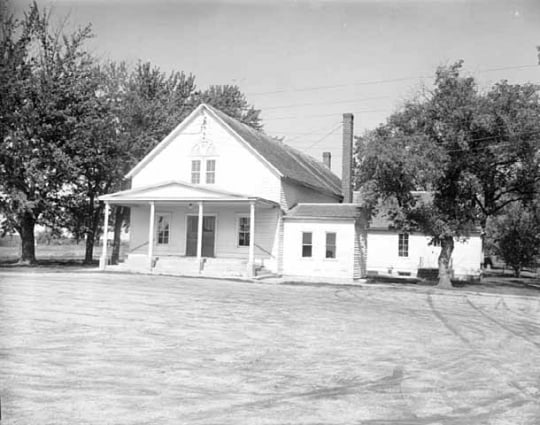
With the railroad expanding westward, Minnesota needed farmers and laborers to work in the new settlements along the railroad line. Minnesota State Board of Immigration member William Seeger advocated for a group of Russian Mennonites to come and live in the new settlement of Mountain Lake.
Transcript
Welcome to MN90: Minnesota History in 90 Seconds.
As the railroad expanded across the country in the 1870s, new settlements popped up along the tracks in Southwestern Minnesota. These new towns created a need for laborers and farmers to work on the land.
William Seeger, a member of the Minnesota State Board of Immigration, advocated for a group of Russian Mennonites to come to one of these settlements. He believed the Mennonites to be hard working and of good character.
Mennonites, a sect of Protestant Christians, generally follow a literal interpretation of the Bible and try to live a simple way of life. Seeger’s advocacy attracted these Mennonites to Mountain Lake, MN in 1872.
The Mennonites of Mountain Lake had a challenging first few years. The 1870’s grasshopper plagues destroyed most of their crops.
Mennonites traditionally establish insular communities and reject most modern technology. But because Mountain Lake was already an established settlement, the Mennonites had to interact more with Western society. Still, the community continued to grow and create a sense of identity in Mountain Lake.
MN90 is produced by AMPERS, diverse radio for Minnesota's communities, made possible by funding from the Minnesota Arts and Cultural Heritage Fund. Online at mn90.org.