
A national retailer is making it easier at the checkout line for some living with a disability. Then, a surprising announcement about the ownership of Indian Motorcycle. And, a city in Northeastern Minnesota celebrates a public safety improvement.
—–Executive Producer: Victor Palomino Producer: Lydia MoranAnchor: Gracie J.Reader scripting: Victor Palomino, Mike ResendezFact checking: Joel Glaser, Victor Palomino Editorial support: Emily Krumberger Mixing & mastering: Emily Krumberger
Transcript
sound element: NSS intro theme]
HOST: You're listening to North Star Stories: Voices from Where We Live, a daily newscast about what it means to live in Minnesota.
ANCHOR: How a national retailer is making it easier at the checkout line for some living with a disability. Then, a surprising announcement about the ownership of Indian Motorcycle. And, a city in Northeastern Minnesota celebrates a public safety improvement.
I’m Gracie J.
Polaris is spinning off its Indian Motorcycle brand into a
standalone company. The Minnesota-based manufacturer announced it will sell a majority stake in Indian Motorcycle to Carolwood L-P, a Los Angeles private equity firm. The deal is expected to close early next year and boost Polaris’ annual earnings by about $50 million. Polaris CEO says the move will let both companies focus on their strengths and drive innovation. The company says the plant in Monticello,
between the Twin Cities and St. Cloud, will continue
manufacturing the popular motorcycle for now.
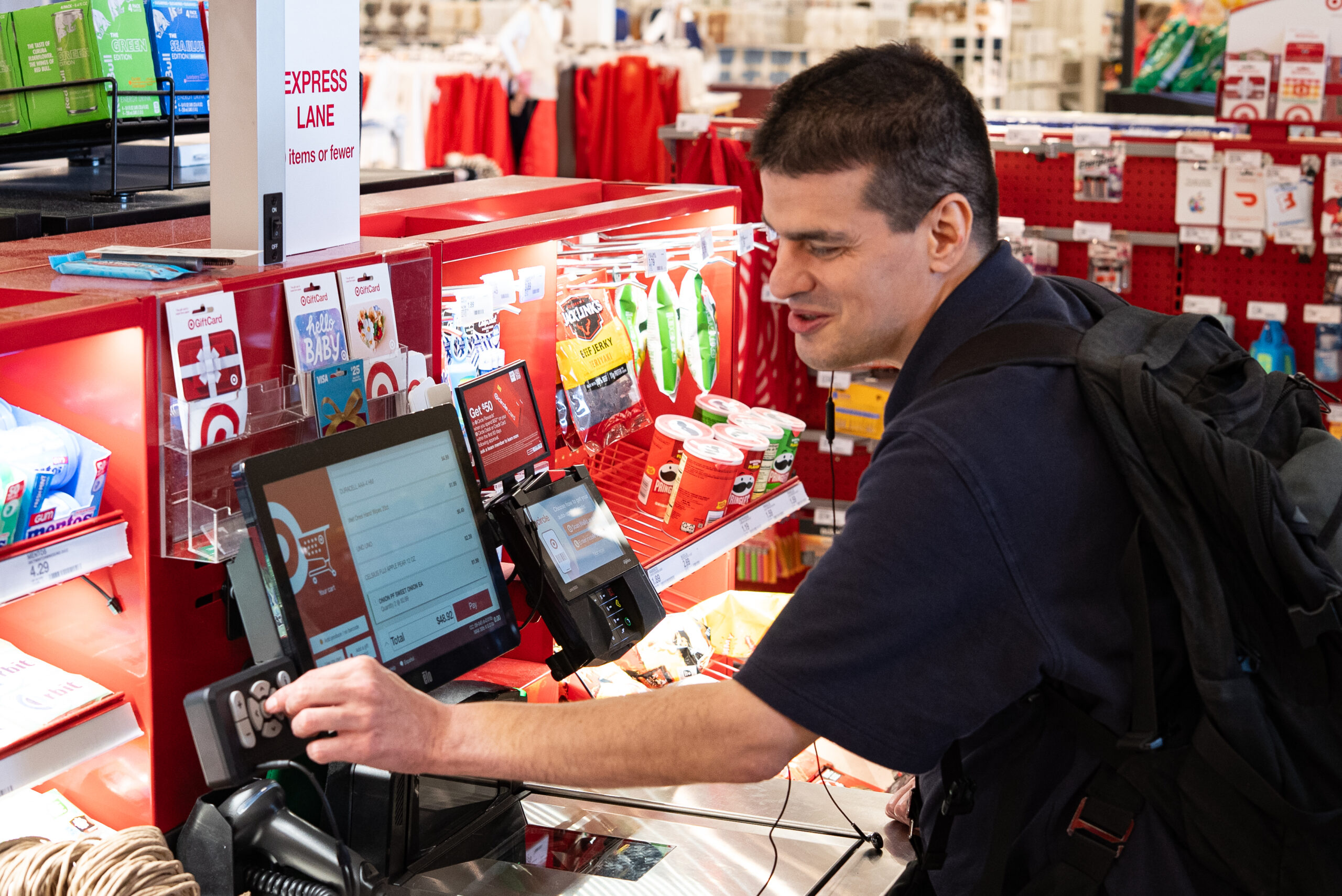
In today’s main story, people who are blind or have low vision have historically been unable to access self-checkout lines at retail stores. One national retailer is attempting to change that. Lydia Moran has more.
Steve Decker: Self-checkout experiences are not fully
accessible in most of the country so far that we're aware of today, and target is changing that.
Lydia Moran: Steve Decker is a senior manager of digital accessibility at Target. He led the development of new technology that will help people who are blind or have low vision use Target's self-checkout line. It will be in stores nationwide this winter.
Steve Decker: We wanted one really seamless, easy
experience.
Lydia Moran: To the side of self-checkout touch screens, there will soon be a controller with high contrast tactile buttons and Braille labels. Customers can plug in their own wired headphones to activate a screen reader.
Nat Sound: Thanks for shopping with us. You save dollar zero dot seventeen today.
Steve Decker: It tells me what I've scanned, what the totals are, what items have been added to my cart. But privately through the headphones. That's a key thing to emphasize is the privacy.
Lydia Moran: Things like ATMs, food service and airport kiosks have similar accessibility functions for blind and low vision users, but Target says they will be the first to offer the service in mass retail.
Aaron Preece: I think it's a good thing that they're doing this, especially as self-checkout becomes more and more common.
Lydia Moran: Aaron Preee is editor of the American
Foundation for the Blind’s Access World Magazine, focused on the intersection of disability and technology. He says people who are blind or have low vision often shop using delivery apps or with the help of another person.
Aaron Preece: But as artificial intelligence is increasing the accuracy of computer vision technologies, that's changing. It's more possible than ever to actually go and just shop on your own and find what you're looking for at a reasonable rate. So this is probably a good time to have accessible checkouts.
Lydia Moran: Target’s Steve Decker says the blind community was instrumental in the self-checkout’s design. Target brought a kiosk to a National Federation for the Blind convention, where hundreds of people got to test it out.
Steve Decker: And that was really important, because many blind and low vision people have never been able to use a self-checkout, and they don't get like I don't get the opportunity to see other people using the self-checkout to know how it works.
Lydia Moran: The team is continuing to improve the
technology based on feedback they've received from users.
Steve Decker: Takes a little bit of practice. I think that's true for anybody, whether they're blind or sighted.
Lydia Moran: But overall, Steve says people were really
excited.
Steve Moran: We do hope this will push the rest of the
industry of mass retail to know that this is possible. This is something that can be done, and it's something that we are hoping others will follow our lead on.
Lydia Moran: For North Star Stories, I'm Lydia Moran.
Anchor: You are listening to North Star Stories.
Virginia, Minnesota, in the Northeastern part of the state, has a new 50,000-square-foot public safety facility. It features upgraded technology, a new training space, and living quarters. It also brings together the city’s fire, police, ambulance, and Urban Search and Rescue under one roof. The city combined funds from the Iron Range Resources & Rehabilitation Board with money from the state and federal government to pay for the project. A future solar array is also part of the plan to help power the new building.
[sound element: NSS outro theme]
HOST: North Star Stories is produced by AMPERS, diverse radio for Minnesota's communities, with support from the McKnight Foundation and the State of Minnesota. Online at ampers dot org.