
Today, a new law makes it easier for those needing tinted car windows. Then, a Twin Cities bridge gets funding for suicide prevention. And, the NCAA elevates a Minnesota university to Division One status.
—–Executive Producer: Victor Palomino Producer: Lydia Moran Anchor: Chantel SinGs Reader scripting: Joel GlaserFact checking: Joel Glaser, Victor Palomino Editorial support: Emily Krumberger Mixing & mastering: Chris Harwood
Transcript
[sound element: NSS intro theme]
HOST: You're listening to North Star Stories: Voices from Where We Live, a daily newscast about what it means to live in Minnesota.
ANCHOR: Today, a new law makes it easier for those needing tinted car windows. Then, a Twin Cities landmark gets funding for suicide prevention, and the NCAA elevates a Minnesota School to Division One status.
I'm Chantel SinGs.
It's now a little easier for Minnesotans requiring tinted car windows. Drivers or passengers with a medical condition that require tinted windows used to have to get a doctor's prescription every two years. But some medical conditions don't improve with time. Doctors can now designate a medical condition as permanent and issue a prescription that doesn't expire, eliminating the two-year renewal requirement. The person driving the vehicle must keep a copy of the prescription in their possession. The new permanent prescription has to be written on or after July 1st of this year.
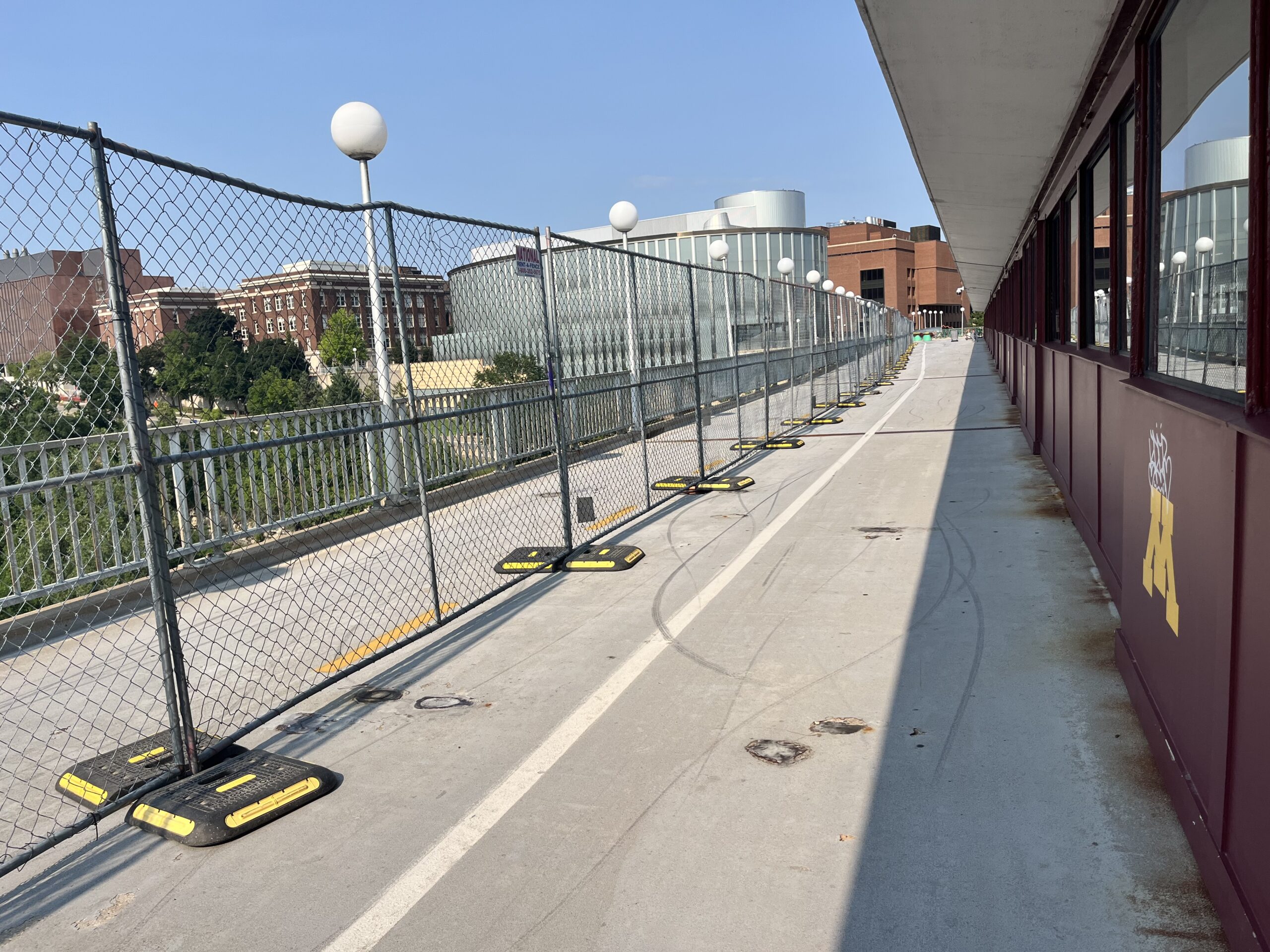
In today's main story, an iconic bridge on the University of Minnesota's Twin Cities campus has also been a high-risk location for suicide. Lydia Moran tells us what the state is doing to try and change that.
Lydia Moran: A bridge in Minneapolis on the University of Minnesota's campus is getting much needed safety improvements. This came after families and advocacy organizations raised the alarm about the site's reputation as a high-risk zone for suicide.
MJ Blair: It's taken as many as two to five deaths a year.
Lydia Moran: MJ Blair began researching the Washington Avenue bridge after losing her daughter Kayla to suicide in 2023.
MJ Blair: It left behind her fiancé, her two kids, who were ages two and three at that time, and just a whirlwind of questions of, you know, why it would happen, and even the location she chose.
Lydia Moran: MJ worked with her family and others affected by suicide to call on lawmakers. Earlier this summer, the state granted 8 million to raise pedestrian railings from three and a half to nine feet. Security lighting and signage will also be updated. The University of Minnesota says construction will be completed by the end of summer 2026. MJ's question is "Why did it take so long?"
Erich Mische: This particular location was a known risk location for over 50 years.
Lydia Moran: Erich Mische is CEO of Suicide Awareness Voices of Education or SAVE.
Erich Mische: Keep in mind that over that 50 year period of time, there was still a lot of stigma attached to suicide, and so nobody really wanted to talk about it. Nobody wanted to raise awareness about this particular location, or frankly, any location that is a known risk factor for suicide.
Lydia Moran: He says there is a common misconception that putting up barriers at one high-risk location simply drives people to another. But the latest research shows that in 90% of cases, people who survive and attempt to take their own lives do not re-attempt.
Erich Mische: If you interrupt that suicidal impulsivity at that particular location, that by itself, or 90% perhaps even larger percentage, folks just simply decide that they're going to go on and live.
MJ Blair: Kayla was love, life, laughter. She was the one that people would go to for strength and support. She had a love for her friends. She had a different love for her family. Her kids were her everything. She's just truly missed.
Lydia Moran: In 2024, MJ Blair and SAVE formed Kayla's Hope Initiative. Next legislative session, Kayla's Hope will advocate for suicide deterrence on all publicly owned structures built or renovated in Minnesota. They are currently building a coalition to advocate for a similar bill on the national level. If you or someone you know is struggling, the 988 Suicide and Crisis Lifeline is a 24/7 hotline for individuals in crisis or for those looking to help someone else. To speak with a trained listener, call or text 988. For North Star Stories, I'm Lydia Moran.
Anchor: You are listening to North Star Stories.
The University of St. Thomas is now officially a full NCAA Division one school. The NCAA Board of Directors recently voted to reclassify the school, moving it from Division Three to Division One. That clears the way for the Tommies to compete in post-season play, including NCAA tournaments and championships. The University is building a controversial state-of-the-art basketball and hockey facility scheduled to open in St. Paul this fall. Neighbors tried to block the new building, expressing concerns that it would decrease their property value and increase traffic.
[sound element: NSS outro theme]
HOST: North Star Stories is produced by AMPERS, diverse radio for Minnesota's communities, with support from the McKnight Foundation and the State of Minnesota. Online at ampers dot org.