
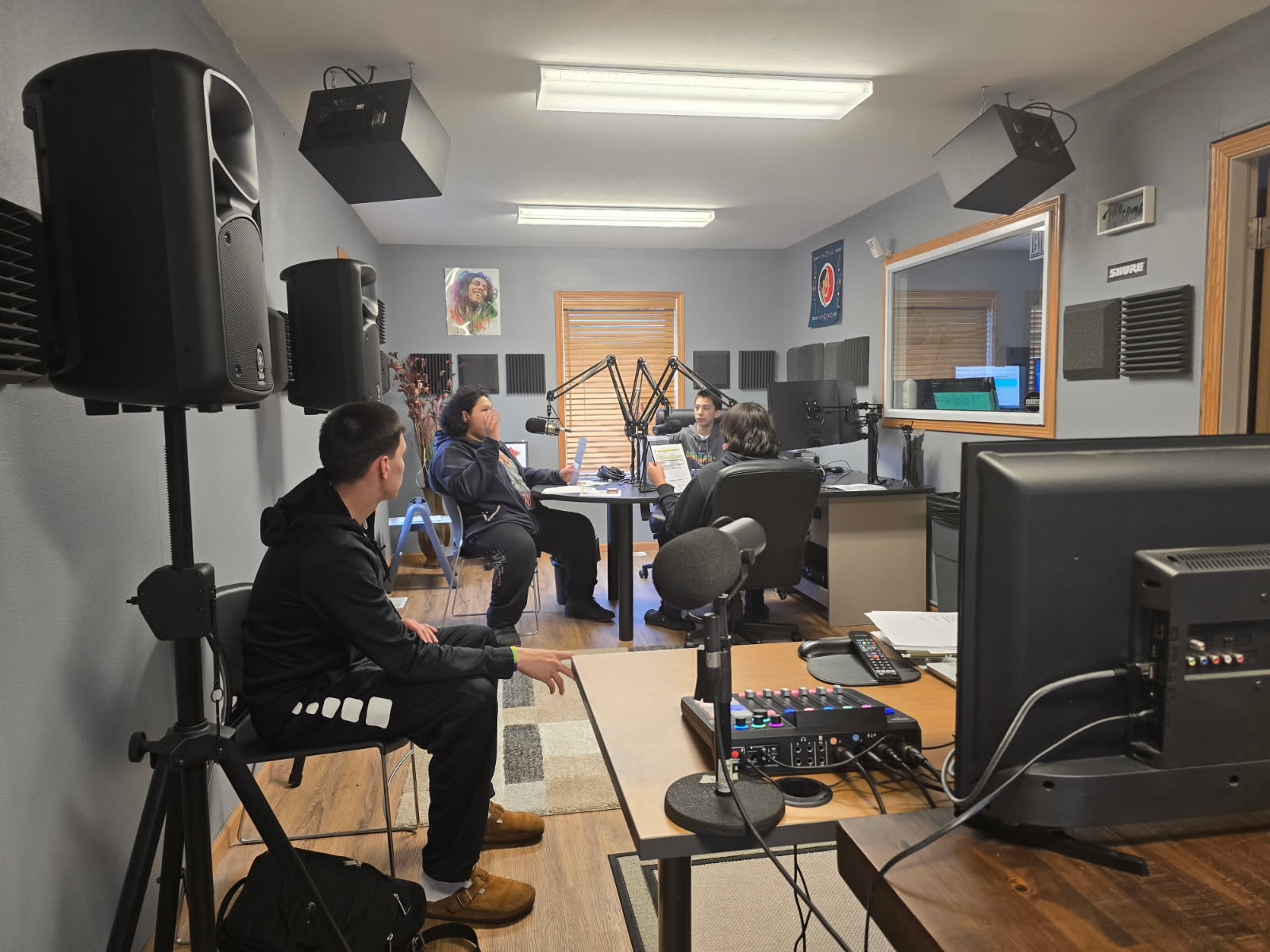
A new reward program aims to help solve Missing and Murdered Indigenous Relatives cases. Then, we begin a two part-series looking at how the elimination of federal funding is impacting public and community media in Minnesota.
—–Executive Producer: Victor Palomino Producer: Xan Holston Anchor: Chantel SinGs Reader scripting: Victor Palomino Fact checking: Joel Glaser, Victor Palomino Editorial support: Emily Krumberger Mixing & mastering: Chris Harwood
Transcript
[sound element: NSS intro theme]
HOST: This is North Star Stories: Voices from Where We Live. Today in Minnesota:
ANCHOR: A new reward program aims to help solve Missing and Murdered Indigenous Relatives cases. Then, we begin a two part-series looking at how the elimination of federal funding is impacting public and community media in Minnesota.
I'm Chantel SinGs.
The Minnesota Department of Public Safety's Missing and Murdered Indigenous Relatives Office, or MMIR, has launched a reward fund tip program. The new initiative offers rewards of up to ten thousand dollars for tips in missing persons, suspicious deaths, and homicide investigations involving Indigenous relatives. The goal is to bring justice and closure to families affected by the MMIR crisis. Sixteen cases are currently eligible for rewards. Tips can be submitted directly to law enforcement or through Crime Stoppers.
Next, after nearly 60 years, the Corporation for Public Broadcasting, or CPB, is shutting down. Minnesota will lose about 17 million dollars in federal funding for public radio and television. In the first of two special reports, Xan Holston looks at what the cuts mean for community radio stations in Minnesota.
Maggie Rousu/KKWE: You're listening to KKWE, 89.9 FM, Niijii Radio, White Earth, Minnesota.
Xan Holston: At the White Earth Reservation in Callaway County, KKWE radio has been on the air since 2011. Right now, station manager Maggie Rousu is wondering how much longer they can hang on.
Maggie Rousu: We pulled back in all our spending. We definitely right now have three months.
Xan Holston: Congress defunded the CPB in July. Nearly half of KKWE's budget, about $200,000, disappeared with it. Hope hasn't.
Maggie Rousu: It seemed really devastating when it first came to us, but as we've talked and we brought more people into the conversation. It feels like we can be successful in moving forward.
Xan Holston: KKWE is one of 17 member stations across Minnesota that are part of AMPERS, the Association of Minnesota Public and Educational Radio Stations. AMPERS stations aren't affiliated with and don't get any funding from Minnesota Public Radio, also known as MPR, or TPT, Twin Cities Public Television.
Joel Glaser: The loss of federal funding is a very significant concern, and could mean the demise of some of our stations.
Xan Holston: That's AMPERS' CEO Joel Glaser, speaking at a recent listening session with US Congresswoman Betty McCollum about the fallout from Congress to funding the CPB. Glaser said the cuts are hitting AMPERS stations especially hard.
Joel Glaser: Because we don't have big development teams. We don't have multi-million-dollar budgets. But our stations play a very, very important role in their local communities.
Xan Holston: Of the 17 AMPERS stations, 10 are losing between 10 to 50% of their annual budgets, about $3 million. That loss is magnified by how small most of the stations' budgets and staff are.
Joel Glaser: These cuts are hitting the Native stations and our other stations in Greater Minnesota the hardest.
Xan Holston: A couple hours east of White Earth, KOJB serves the Leech Lake Area.
Chris Bedeau: You're listening to KOJB, 90.1 FM, the Eagle.
Xan Holston: KOJB is losing about 35% of its budget. Station Manager Chris Bedeau said it will leave a big gap, but it's one they've been planning for by exploring ways to reduce their dependence on federal money. One of those ideas is launching a satellite station in the Twin Cities to expand KOJB's reach and tap into the state's largest Native population.
Chris Bedeau: And that's been in the works for about six to eight months. You know, it's just a planning and timing thing.
Xan Holston: Bedeau said the expansion could help the station build new connections and revenue streams in a much larger market.
Chris Bedeau: Anything we can do to further our reach and promote our programming in order to maybe ask some more support and understand how viable we are to our local communities.
Xan Holston: He said that while the loss of CPB funding is a serious blow, they're determined to adapt.
Chris Bedeau: It's unfortunate that this happened, but there's nothing you can do about it. You can do two things, just sit there and worry about it, or want to do something about it and create new partners and new revenue streams.
Xan Holston: For North Star stories, I'm Xan Holston.
It should be noted that AMPERS produces North Star Stories and is responsible for its content. AMPERS itself does not receive CPB funding but helps raise funds for its 17 community radio stations.
AMPERS is conducting a first-ever statewide funding campaign to help replace the loss of federal funding. Information about that fundraiser is online at AMPERS dot org.
ANCHOR: Tomorrow, we'll look at how the federal cuts are impacting Minnesota Public Radio, Twin Cities Public Television, and the smaller public TV stations, which are not affiliated, nor do they share funding, with the 17 community radio stations discussed in today's report.
[sound element: NSS outro theme]
HOST: North Star Stories is produced by AMPERS, diverse radio for Minnesota's communities, with support from the McKnight Foundation and the State of Minnesota. Online at ampers dot org.