
Officials warn about an invasive species in the Northeastern waters. Plus, early voting is underway in Minnesota and, a new state task force will try to make healthcare more affordable.
—–Executive Producer: Victor Palomino Producer: Victor PalominoAnchor: Grace JacobsonReader scripting: Victor PalominoFact checking: Joel Glaser, Victor Palomino Editorial support: Emily Krumberger Mixing & mastering: Chris Harwood
Transcript
[sound element: NSS intro theme]
HOST: You're listening to North Star Stories: Voices from Where We Live, a daily newscast about what it means to live in Minnesota.
ANCHOR: In today's broadcast, early Voting is underway in Minnesota. Then, local officials warn about an invasive species in the northeast waters. And, a new state task force will try to make healthcare more affordable.
I'm Gracie J.
Minnesota voters can begin casting ballots ahead of Election Day on November 4. Early voting runs through Monday, November 3. You can vote early in person by submitting an absentee ballot at your county election office, or in some cases, at your city clerk's office. Voters in areas where ballots are sent to voters by mail may also cast ballots early at their county office. Unless you are registering in person on election day, you have to register by October 14th. More information, including polling locations, is available on the Secretary of State's website.
Next, in this month's report from the northeast part of the state, the WTIP News Director talks about an invasive species present in Cook County lakes and a special visit from a group of international journalists to the WTIP station. Victor Palomino has more.
Victor Palomino: Spiny water flea is an invasive species introduced into Lake Superior in 1995. According to Kalli Hawkins, WTIP News Reporter, in Cook County, about a dozen lakes have the spiny water flea.
Kalli Hawkins: It was suspected to have been made or introduced to the Great Lakes through the use of ballast tanks on freighter ships. Since it was introduced to Lake Superior, it's kind of expanded out regionally from there into many inland lakes. Many of those in our neck of
the woods in Cook County.
Victor Palomino: The spiny water flea eats the natural zooplankton in the Northern Minnesota lakes called Daphnia. An essential source of food for native fish species. These create a significant environmental impact.
Kalli Hawkins: The most recent story that we covered was that it was found in Poplar Lake, And so the U.S. Forest Service officials were doing some water testing and happened to find a spiny water flea in Poplar Lake, which is a Boundary Waters Canoe Area Wilderness access lake, very popular recreational lake. A lot of homeowners and property owners live on that lake as well.
[SFX - Fishing line]
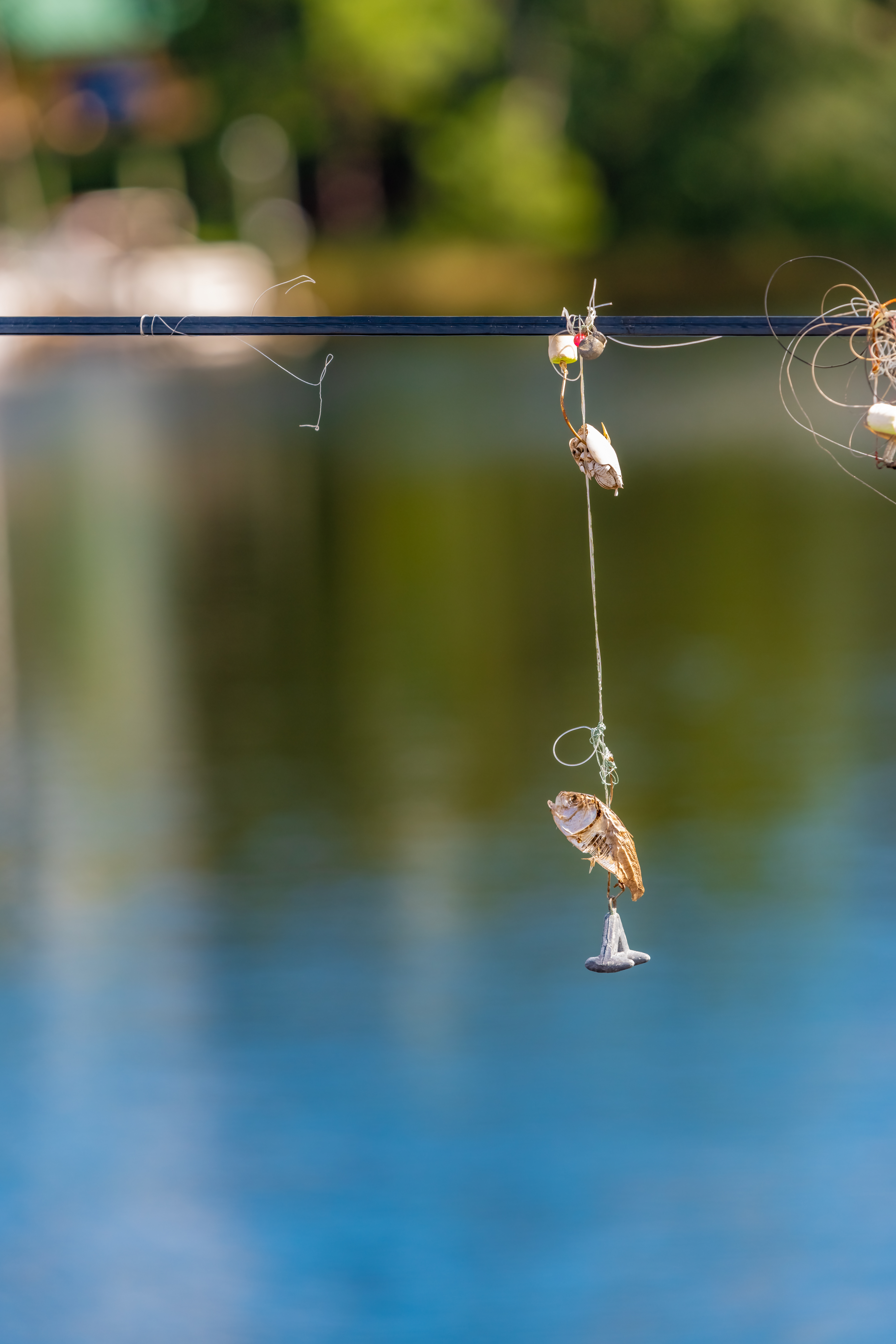
Victor Palomino: The spiny water flea is most commonly spread through fishing line. And it can also stick to the bottom of a boat or the bottom of a canoe.
Kalli Hawkins: And so it attaches onto that really thin monofilament of that fishing line. And so if somebody is fishing, one lake moves over to a different lake and fishes, and then that spiny water flea is still hanging on dangling on there, it can be introduced to a different lake. So, uh, officials and the U S forest service and local officials recommend if you're fishing for any of those anglers to just wipe down your fishing line before you transfer over to a different lake and fish another lake.
[NSS music transition]
Victor Palomino: In other news from the Northeast, a group of international journalism students recently visited WTIP's studios.
Kalli Hawkins: We had some nine journalists from different countries visit us here at WTIP community radio and Grand Marais. They travel across the U.S. we're one of the stops here.
Victor Palomino: The group met with reporters and journalists at WTIP. They also hosted a panel with community members in the area.
Kalli Hawkins: it's an opportunity to learn about. And explore kind of the United States media culture, its politics, its current issues, how that relates back to, you know, their similarities potentially in their countries.
Victor Palomino: Some of the journalist shared their perspectives with WTIP, and the interviews can be found on the station's website. And, the students...
Kalli Hawkins: ...absolutely loved Grand Marais so far. I mean, who wouldn't, uh, we live in a beautiful place.
Victor Palomino: To listen to all of the stories from the northeast, visit WTIP.org. For North Start Stories, I'm Victor Palomino
ANCHOR: You are listening to North Star Stories.
The Minnesota Department of Health is launching its first Health Care Affordability Advisory Task Force. The 15-member group will study why health care costs continue to rise faster than wages and recommend strategies to keep care affordable for families, workers, and businesses. Department officials say the task force brings together consumer voices, health care experts, and community leaders from across the state. Members will review Minnesota data, national research, and patient experiences to identify bold, evidence-based policy solutions. The task force will hold its first meeting this month, and all meetings are open to the public.
[sound element: NSS outro theme]
HOST: North Star Stories is produced by AMPERS, diverse radio for Minnesota's communities, with support from the McKnight Foundation and the State of Minnesota. Online at ampers dot org.