
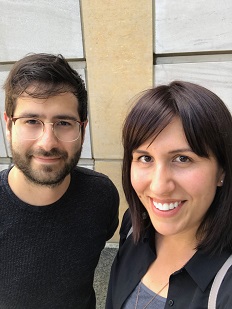
Almost a year ago, the Minnesota Native News team asked the community what it wanted to hear more about. Our sense of humor, you said. Our resilience. Our elders’ stories. The result is Native Lights.
Transcript
Headlines:
Marie: This week on Minnesota Native News, we’re announcing the launch of our new podcast, Native Lights.
This is Minnesota Native News. I’m Marie Rock.
[Story #1 Native Lights]
Marie:
Almost a year ago, the Minnesota Native News team asked the community what it wanted to hear more about. Our sense of humor, you said. Our resilience. Our elders’ stories. The result is Native Lights.
Tape: Welcome to Native lights podcast, where indigenous voices shine. I’m your host, Leah Lemm. And I’m your other host, Cole Premo. Thank you for joining us on our first podcast episode.
Marie: The hosts’ names will probably be familiar to you. But the people behind the names? Maybe not so much.
So first off we should probably let you know who we are. Why don’t you go first, Cole? First off we’re brother and sister, right? That’s right. Yep, I remember when you were born. Yep, I’m the younger brother, the middle child. We also have a younger brother, Brice, he’s amazing. We’re Mille Lacs Band of Ojibwe members. Proud members of the Mille Lacs Band of Ojibwe. We’re both musicians; I’ve been playing guitar and singing for a couple decades now. We’ve played together a little bit too. I’m a songwriter and a giant fan of Tori Amos. And we’ve both worked in media. And we’ve both worked in media for quite a while now. Over a decade at least.
Cole and Leah tell stories with and about people in our community – some not very well known, and a few kind of famous. Rob Fairbanks from Leech Lake, for example. You many know him as the “Rez Reporter.”
Leah: He really is popular, some of his stuff has gone viral. He’s all around funny and a really nice guy. Rob: When I first started the Rez Report videos I thought my friends will get it, everybody in Northern Minnesota will understand, but I had no idea it would go viral as far as it has.
Marie: So Episode One is all about people doing what they were born to do. Like Leah, the host, who knew she like to sing, but needed encouragement at first to perform.
Leah: I never thought there’d be anybody who actually needed to hear my voice, but if we’re given a gift, then it’s meant to be passed along. Cole: And it’s your responsibility to share it. Leah: It absolutely is. And on the flip side, don’t waste your gift. You’re doing yourself and you’re doing the community a disservice if you don’t use it.
Marie: We hear from elders too, like Jody Beaulieu (BOWL-ee-oh), Black Standing Woman, from Red Lake. She learned how to stand her ground from her family, and went on to participate in the Red Power movement of the 1960s and 70s. She occupied Alcatraz and, later, with the American Indian Movement, Wounded Knee.
Jody: I was assigned to the guard shack along with a Lakota woman I was with and an Alaskan woman that I came from California with. We were getting up at 5 in the morning, manning the guard shack and getting on with the business of the day. One day there was a trailer house a little ways a way and I said “I think I’ll go over there and see if I can get us any breakfast. So I went over there and the AIM head guys were there and there was also a news reporter and I went in just like I owned the place because we did, and I walked through the kitchen, got maybe three pancakes and put them on a plate and the newsman said ,”Is there anything you want the outside world to know.” And I said yeah tell em we’re starving in here and we need food. And he says “well it doesn’t look like it,” And I said, “Well these 3 pancakes are going for 6 people,” and I took em back to the guard shack. And I was surprised I was able to stand up for myself.
Marie: That was Jody Beaulieu from Red Lake. You can hear more from her, and many others, by checking out our new podcast, Native Lights, wherever you get your podcasts.