
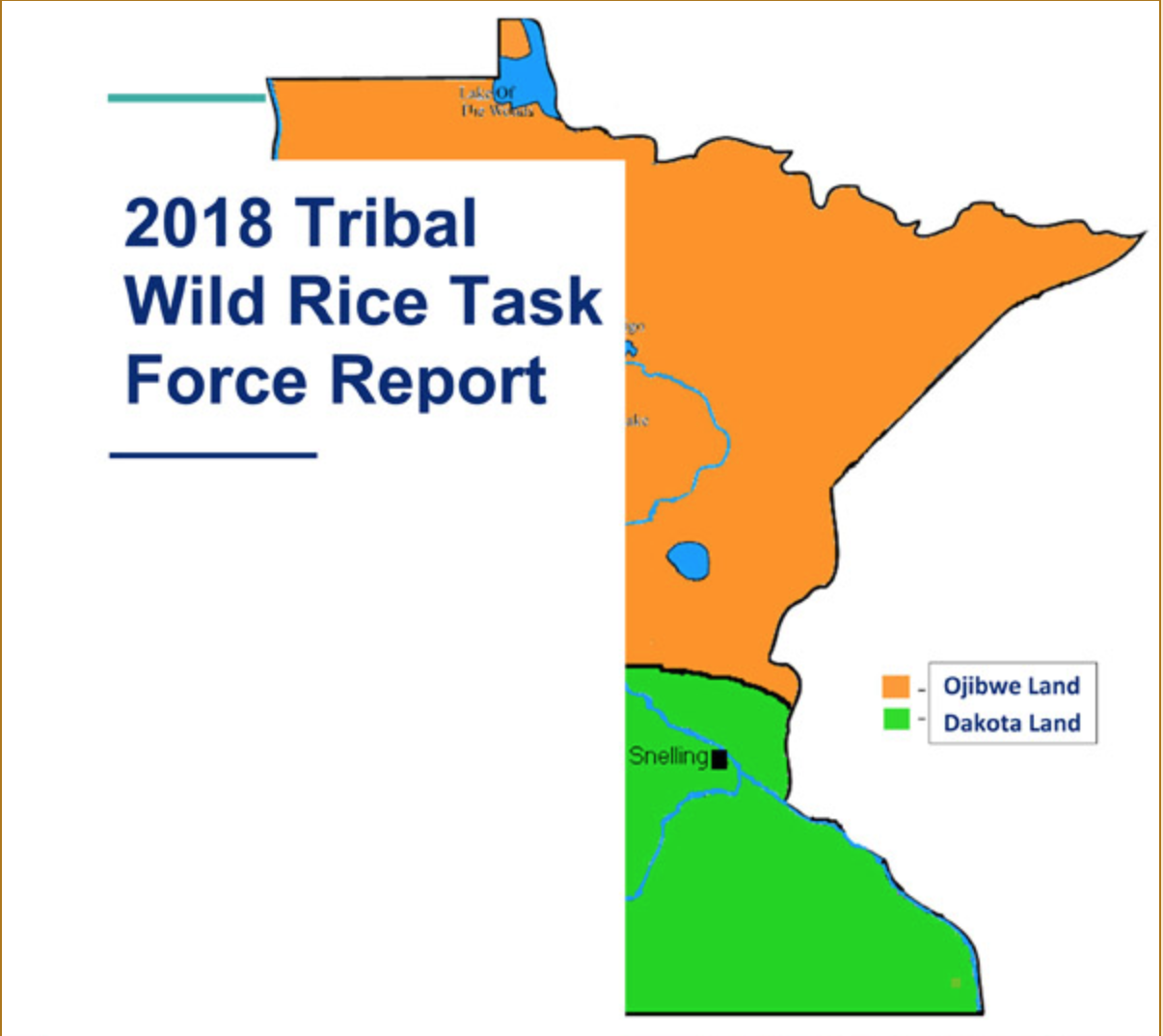
For possibly the first time ever, the Minnesota Chippewa Tribe has convened all 11 Ojibwe and Dakota tribes in Minnesota to protect wild rice in the state. Their three main recommendations are clear – how will state legislators respond?
Transcript
For possibly the first time ever, the Minnesota Chippewa Tribe has convened all 11 Ojibwe and Dakota tribes in Minnesota to protect wild rice in the state.
Reporter Melissa Townsend has the details.
The coalition came together in response to a statewide wild rice task force Governor Mark Dayton established in 2017.
NORTHBIRD: As a whole, all of the 6 Bands of the Minnesota Chippewa Tribe had an issue with it. (:06)
Michael Northbird is the Environmental Program Manager for the Minnesota Chippewa Tribe.
NORTHBIRD: Long story short, it’s because the Governors Task Force on Wild Rice was comprised of industry representatives. And so, those who are meant to be regulated are given influential power over the best interest of the pubic. (:13)
Of the 15 seats on the Governor’s Task Force - 8 were for industry and 3 were for tribes.
So instead of being a part of the Governor’s Task force, Minnestoa Chippewa Tribe leaders created their own.
In their final report released in December, there are a number of recommendations — but three major findings STAND OUT
First, they detail which water quality regulation should be in place?
NORTHBIRD: This law that’s been in place since 1973 should have been enforced all this time and then not only the people of Minnesota but industry themselves would not be at this point. (:11)
That law limits Sulfate to 10 MG/L of water.
It was never enforced and for the past few years there’s been talk of changing the regulation.
The tribes do not want to do that to happen
Another main finding in the Minnesota Chippewa Tribe’s report identifies which bodies of water in the state are wild rice waters — where the regulation should be enforced.
It turns out different agencies have different lists.
NORTHBIRD: The Minnesota Pollution Control Agency may not have the same definition or common agreements with the Minnesota DNR as far as what constitutes as a wild rice water. (:23)
The tribal wild rice task force recommends combining all these lists.
The final number of wild rice waters would include more than 2,300 lakes.
The final main point of the tribal report comes from scientific data collected in water throughout the state.
Using this data the report identifies one area where water sulfate levels are the highest -
— it’s around the mines in the northern half of the arrowhead.
Michael Northbird, Environmental Program Manager for the Minnesota Chippewa Tribe says he wants this to be clear.
He says there’s been a lot of confusion about whether municipal waste water treatment plants would have to install expensive equipment.
NORTHBIRD: You had a bunch of people that were not going to be affected by any of it. It wasn’t going to cost them or their customers or rate payers any more extra. But they’re showing up at press conferences and making up hypotheticals like who’s to stop someone from saying our little waste pond we built last year is all of a sudden going to grow wild rice and you know what I mean - they did a really good job of building up that fear in people that was just completely unwarranted. (:28)
The report has been delivered to state legislators.
And Michael Northbird the Tribal Wild Rice Task Force hopes they take it seriously.
For Minnesota Native News, I’m Melissa Townsend.