
In today’s program, concerns about the suicide rates in Greater Minnesota. Then, Minnesota’s young adults tell us how the Murder of George Floyd has impacted their lives. And, Maplewood Mall welcomes a new Pan Asian Center.
Transcript
[sound element: NSS intro theme]
HOST: You're listening to North Star Stories: Voices from Where We Live, a daily newscast about what it means to live in Minnesota.
ANCHOR: In today's broadcast, concerns about the suicide rates in Greater Minnesota. Then, Minnesota's young adults tell us how the Murder of George Floyd has impacted their lives. And, Maplewood Mall welcomes a new Pan Asian Center. I'm Chantel SinGs.
While the suicide rates for the entire state remained flat from 2023 to 2024, deaths by suicide in rural counties were twice that of the Twin Cities. Researchers point to limited access to health and mental health care, higher poverty levels, and the fact that gun ownership is higher in rural communities as possible reasons for the disparity. Anyone having suicidal thoughts or concerns about someone else's safety should call or text 988 immediately, night or day.
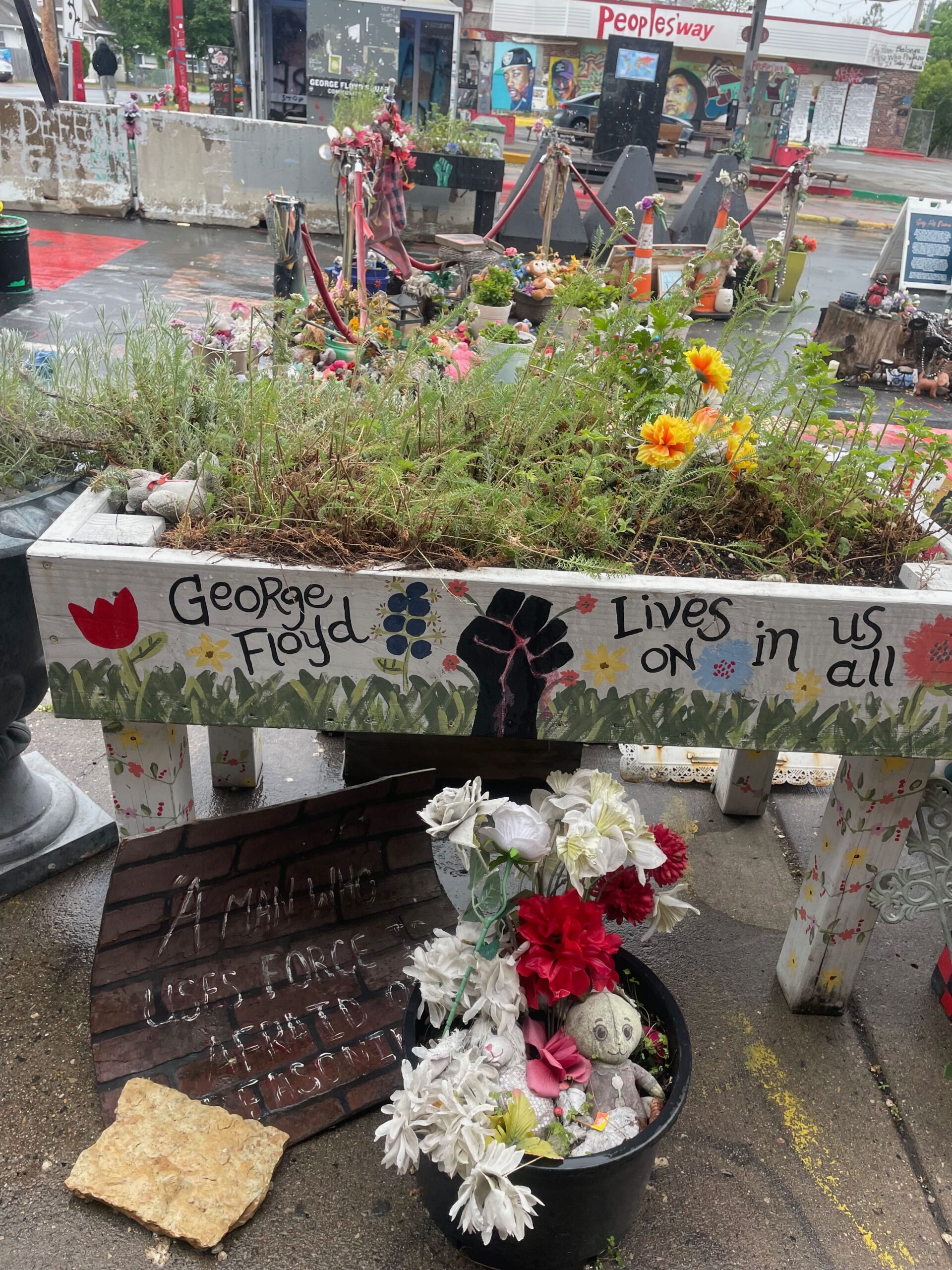
Next, we continue our series of special reports looking at the impact the murder of George Floyd had on our state. As Reporter Mik Finnegan [MIHK FIN-uh-guhn] tells us, the murder itself and the community response it ignited left a lasting impact on Minnesota's young adults.
Helena Kouame: People's experience with the murder of George Floyd is all very different from each other. We all experienced the same thing, but we all took it in a different way. Down
Mik Finnegan: Down the street from where Helena Kouame grew up is George Floyd Square. Helena was 15 years old and attending South High School the summer that former Minneapolis Police Officer Derek Chauvin murdered George Floyd. I
Helena Kouame: I was pretty active during that time, one would say, almost a little too active for where I was in life.
Mik Finnegan: Like many Twin Cities youth rocked by what they saw in the viral video, Helena spent considerable time at protests and rallies that summer.
Helena Kouame: it made me realize, like, you can't be an activist 24/7, and that becomes a really hard thing to realize when you are black, because, like as a black person, I felt like I needed to be there.
Mik Finnegan: What she witnessed, both in the streets and in conversations, started to take a toll on her mental and emotional health.
Helena Kouame: I was yelling at my friends a lot, because when you have a lot of white friends, they don't understand what you're going through.
Mik Finnegan: For Helena, this became a heaviness she carried.
Helena Kouame: I brought it home. I brought it in my friendships. I brought it everywhere with me. And it felt like such a heavy weight to carry, and it kind of made me realize, like, why does it always have to be on just our backs?
Mik Finnegan: Across the river in St Paul, Rena Curtis was finishing up the eighth grade that May.
Rena Curtis: On like an individual level, George Floyd's murder and then the murder of so many other people following him, forced myself and a lot of other especially young white people, to consider our complicity.
Mik Finnegan: Today, Rena and Helena are hesitant about how much social change has taken place in response to the public's demands for justice.
Rena Curtis: A lot of people love to say it's like, oh, these changes take time, and they do, and when there is active work that is being done to prevent systemic change, you can't hide behind that.
Helena Kouame: I think there was brief change.
Mik Finnegan: In 2020, some of that change took place in Rena's classroom.
Rena Curtis: There was a lot of conversations about what we were doing, and like how it felt like I would go spend my day at a protest seeing people I care about be like brutalized and being tear gassed for the first time myself, and then I would come back to school, like online the next day.
Mik Finnegan: Ultimately, Helena and Rena agree that they were forever shaped by the movement for racial justice following George Floyd's death.
Helena Kouame: The murder of George Floyd really made people see that things need to change.
Rena Curtis: There's not another option other than to believe that change is possible and change will happen.
Mik Finnegan: For North Star Stories, I'm Mick Finnegan.
Anchor: You are listening to North Star Stories.
A big transformation is underway at Maplewood Mall. Twin Cities entrepreneur Toua Xiong has acquired both the old Sears and Macy's spaces. He plans to redevelop the site into a Pan Asian Center featuring dining, shopping, offices and event spaces. Xiong says the goal is to revitalize the once-busy mall and create a thriving destination for the entire community.
[sound element: NSS outro theme]
HOST: North Star Stories is produced by AMPERS, diverse radio for Minnesota's communities, with support from the McKnight Foundation and the State of Minnesota. Online at ampers dot org.