
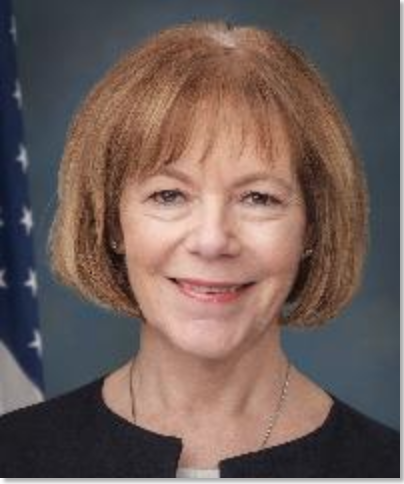
The CARES Act that was signed into law on March 27th provides emergency assistance and health care response for people, tribes and businesses affected by the Coronavirus pandemic. The law includes 8-billion dollars for tribes and urban Indian communities across the U-S. Reporter Melissa Townsend talked with U.S. Senator Tina Smith about provisions for Native communities. Smith represents Minnesota and serves on the U-S Senate Committee on Indian Affairs.
Transcript
Host Intro:
The CARES Act that was signed into law on March 27th provides emergency assistance and health care response for people, tribes and businesses affected by the Coronavirus pandemic.
The law includes 8-billion dollars for tribes and urban Indian communities across the U-S.
Reporter Melissa Townsend talked with U-S Senator Tina Smith about provisions for Native communities.
Smith represents Minnesota AND serves on the U-S Senate Committee on Indian Affairs.
———
TOWNSEND: So I read a few reports that say the original bills didn't include any provisions for tribe, is that accurate?
SMITH: That is accurate. When we were negotiating this big CARES Act package, there was good strong bipartisan negotiation amongst the members on the Senate side. And the National Congress of American Indians was pushing for um, significant resources and I was in close touch also with Minnesota tribes. And then what happened was Senator McConnell, the majority leader, kind of cut short those negotiations and put forth a package that didn't include any of the things that we've been talking about. And at that point the Democrats all refused to agree to go forward until we got a better bill. And the bill that we finally passed unanimously included explicit provisions to help tribal governments like all compromises. So this is not perfect, but will be a step in the right direction for our tribal governments and for urban Indian populations.
TOWNSEND: Got it. Now I'm looking at the process. It sounds like the BIA determines how much each tribe will get and the leadership of the tribes need to basically submit a proposal outlining virus related expenditures.
SMITH: What is most important is that we have got to have meaningful government to government consultation as the decisions are made for how these funds are going to be distributed. All of the Minnesota tribes have elected to shut down their casino operations, which then of course is not only a major source of employment, but it also is a major source of revenue for their tribal governments. So that creates this double hit for folks living in Indian country and that double challenge for tribal governments to try to address.
TOWNSEND: I was looking at that, I know there's small business launch if you employ 500 people or less like the gas stations, the convenience stores that are sometimes on trust land, but the casinos there just no help for them currently.
SMITH: Well, first you're absolutely right. Um, smaller under 500, uh, tribally owned governments and other businesses on tribal land. What it says is that if you keep your employees hired, you can get basically a forgivable loan, essentially it's a grant, for up to eight weeks of your business expenses, wages, rent, utilities, those kinds of operating expenses. So that's a significant benefit for smaller businesses.
TOWNSEND: That’ll go directly to tribes, not like filter through the state or counties?
SMITH: That goes directly to try to tribes, and of course that's really important because not only does it take longer if it filters through counties, but then sometimes things happen and I want to reinforce it. It's not a competitive grant program. And hopefully those dollars, we expect those dollars to start flowing in the next week or two.
TOWNSEND: You mentioned urban Indian programs, you know a lot of these agencies have billable services and they're not meeting their clients or students. And so is there relief for these folks?
SMITH: The same programs I was describing that would help tribal businesses also can help nonprofit organizations. And so those service providing organizations in a Little Earth and other places around Duluth and Bemidji and other places are also eligible for those forgivable loans. And of course tribal members and expect to get the direct cash payment that is a part of this big CARES package as well. And it also includes, of course, the seniors, which is a really important, seniors will be able to get those direct payments just as they get their social security payments. So those are all really important benefits that I believe, however, that this is something that we're going to have to continue to work on as we move forward.
There'll be other pieces of legislation, I have no doubt because of the seriousness of this challenge.
TOWNSEND: That’s great. Urgency really seems to be a key piece of all of this business.
SMITH: Well, it is so important because what we have really experienced here is sort of a catastrophic public health and economic earthquake that struck so suddenly. And this Covid-19 virus layers over, you know, hundreds and hundreds and thousands of years of trauma. And that is why I feel so personally responsible for doing everything I can to make sure that there's urgency here, that we act out of respect and humility and that we truly honor our trust and treaty obligations.
HOST: Senator Smith says the guidelines for applying for funds should be released by the Bureau of Indian of Affairs this week.