
This Week on Minnesota Native News: redefining healthy communities, disavowing the Doctrine of Discovery and helping homeless families land on their feet.
Transcript
HOST INTRO: This Week on Minnesota Native News: redefining healthy communities, disavowing the Doctrine of Discovery and helping homeless families land on their feet.
STORY #1 - HEALTH ASSESSMENT
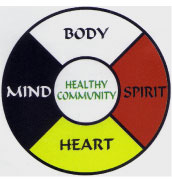
HOST: The Minnesota Department of Health is focusing on a new set of conditions that impact people’s health.
RAYMOND: We’ve been trying to change the conversation about what creates health from only individual behavior or only medical care. (:08)
HOST: Jeanette Raymond supervises the Community Engagement unit at the Minnesota Department of Health.
She says leaders there want to focus on more holistic ideas of what it means to be healthy, like people’s sense of belonging, our access to nature and our opportunities for good jobs, good schooling and stable housing.
RAYMOND: So this is part of changing that conversation so we can come together in a different way to create those conditions. (:06)
HOST: Her team has drafted a new Health Assessment Report… and Raymond says they are looking for feedback from across the state —
She wants to know — do these idea make sense in different communities…. Including Tribal nations. Jackie Dionne is the Tribal liaison at the Department of Health.
DIONNE: We really have to look at how are we working in partnership with tribes and I think including American Indian and tribal partners in documents like this shows folks that we really are intention on how we work in community. (:13)
HOST: You can find the Draft Minnesota Health Assessment Report online, and you can offer written feedback through July 6th.
STORY #2 - LUTHERANS REJECT DOCTRINE OF DISCOVERY (1:55)
HOST: Lutheran Pastors of 230 congregations in Northwestern Minnesota recently voted to denounce the Doctrine of Discovery.
Reporter Melissa Townsend tells the story.
REPORTER: The Doctrine of Discovery is the set of church directives that gave clergy permission to invade and destroy Native communities during the colonization of North America.
OLSON: In 1493, Romonas Pontificas says subdue and vanquish and bring to perpetual slavery any saracens, heathens and enemies of Christ.
REPORTER: Mark Olson is a Lutheran pastor and member of the Northwestern Minnesota Synod of the Evangelical Lutheran Church of America.
OLSON: I mean when we read that, we say this is not our church. This is not our understanding of Jesus. This is not a movement we want to follow. (:22)
REPORTER: Olson says it was high time the synod vote on a resolution to acknowledge that history and to reject that role of the church.
OLSON: It’s an act of confession for all of the things that have happened. it’s a commitment to hopefully right some of those wrongs and work for justice. (:09)
REPORTER: Olson says recognizing historical wrongs clears the path for churches to support tribal sovereignty - like the water protectors at Standing Rock.
But he also knows some Natives are skeptical of the move.
OLSON: I’ve heard — hey, this is a 21st century form of the church trying to evangelize us. And you know, we deserve that, that distrust and that suspicion. We need to wear that. (:16)
REPORTER: The resolution passed by the ELCA churches includes a commitment to dedicate financial resources to build relationships with Ojibwe communities in northwestern Minnesota.
For Minnesota Native News, I’m Melissa Townsend.
STORY #3 - HOMELESSNESS PREVENTION (1:24)
HOST: A group of Ojibwe tribes recently received state funds to keep families from becoming homeless.
It’s the first time any tribe has received this grant.
In order to become eligible, tribal representatives needed to explain what homelessness looks like on their reservations.
Kristi Dawes is the homeless/housing coordinator for the White Earth Nation and she is Chair of the Minnesota Tribal Collaborative to Prevent and End Homelessness.
DAWES: We have a few people living in abandoned buildings and living on the street, but the majority of our people are doubled up. (:06)
HOST: “Doubled up” means multiple families are living in one household.
Kristi says some outsiders mistakenly thought that several families living in one house was a cultural tradition.
It’s not … but generosity is.
DAWES: Our culture is to take somebody in - we’d much rather take someone in rather than see them living out on the street. What ends up happening is we’ll have a household with 2-3 bedrooms and there’s at least 14 people living in that household. It may contain 2-3 different families at the same time. (:18)
HOST: Kristi says the money will help individual families transition into their own homes and help with security deposits, and the first few months of rent.
The state grant for 309-thousand dollars will be shared among White Earth, Red Lake, Bois Forte, Mill Lacs, and Leech Lake.
These are the member tribes of the Minnesota Tribal Collaborative to Prevent and End Homelessness.