
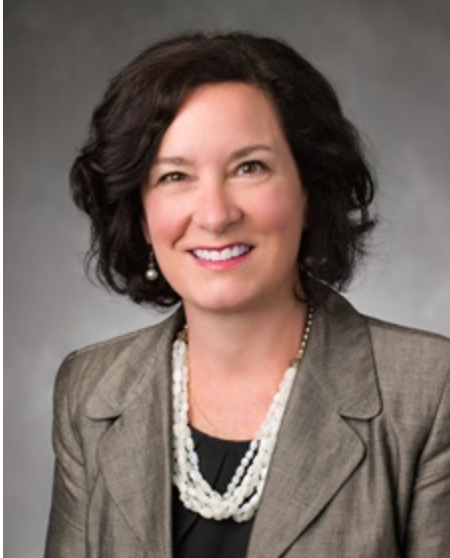
The Federal Reserve Bank of Minneapolis recently held a roundtable conversation about helping American Indians and Alaska Natives build their own homes on trust land. Home ownership has the potential to stabilize communities, build regional economies and create generational wealth for Native families. Reporter Melissa Townsend speaks with one woman helping break down the barriers to home ownership for American Indians.
Transcript
HOST: The Federal Reserve Bank of Minneapolis recently held a roundtable conversation about helping American Indians and Alaska Natives build their own homes on trust land.
Home ownership is a way to stabilize communities, build regional economies and create generational wealth for Native families.
Reporter Melissa Townsend spoke with one woman helping break down the barriers to home ownership for American Indians.
REPORTER: Patrice Kunish is Director of the Center for Indian Country Development at the Federal Reserve Bank of Minneapolis.
She says about 71 percent of people living in rural areas own their own homes — but in Indian county only about 56 percent of Natives are home owners.
She believes that needs to change.
KUNISH: Home ownership is the ultimate way you build community - you have homes, you have better schools, you have nice amenities, you have businesses, that support that. (:11)
REPORTER: One of the reason it’s difficult to develop homes on reservations is the bureaucracy that’s involved with tribal trust lands.
KUNISH: Any sort of lending that touches and concerns trust land has to go through the Bureau of Indian Affairs and that is where we are finding some lenders spend a lot of time waiting to get the necessary titles, status reports, finished and completed and certified. And you know, in the lending business, time is money and you need it to be quick and efficient and consistent. That is not the way Indian country is set up to do this kind of work. (:33)
REPORTER: Kunish says it can take up to 5 years for a home sale to be approved!
KUNISH: My self, my family has allotted lands on the Standing Rock reservation, now these are not tribal lands, these are allotted lands that are still restricted trust lands. And we have not been able to get anything going in a couple of generations! (:15)
REPORTER: But she says, some tribes have figured out how to take home ownership into their own hands.
KUNISH: The Salish-Kootening tribe of Montana which is outside of Missoula, has its own land title office, and it has again assumed all responsibility from the BIA for its land and realty operations. So it actually promotes home ownership, it builds homes, it makes homes available, it supports a mortgage lending process. But it actively cultivates home ownership. (:30)
REPORTER: Ironing out the bureaucratic wrinkles is one thing — but there are other concerns when developing homes on tribal trust land.
I was talking about this issue with someone from Red Lake. And he said Native families living on reservations can be diverse — Natives marry non-Natives and because of blood quantum rules, their children may not be enrolled members. He wondered, can non-Native spouses inherit property on trust land. Can their un-enrolled children inherit the house?
KUNISH: Remaining on the land, it’s something I think the community needs to address and I - from my experience, they’ve been embracing of that family until the family decides to move. (:15)
REPORTER ON PHONE: I was talking to another woman from White Earth actually that is a checker board reservation and she was saying - I would never build my house on trust land and -this is just her perspective - That, she didn't want to be restrained I guess - she wanted to build her house, be able to sell he house to whomever she wanted. Do you have a perspective on that or is it a person’s choice?
KUNISH: It is a person’s choice. So she would only be able to sell her house to a Native person. And that may be a smaller field of eligible buyers and she’s making the decision, as I want to be available to sell my property to whomever I want to. None the less, she is still on the reservation and deriving benefits from the tribe,and so there is that sort of cultural connection but also the tension with trying to make something of the land that’s restricted. (:57)
REPORTER: Kunish believes maintaining trust land is essential to maintaining tribal sovereignty.
KUNISH: I’m very tied emotionally and culturally to the Standing Rock tribe for example, to the allotted lands that we have out there. I would like to find a way to barrel through the lending policies to make these lands more amenable to development and I think there are some interesting models being discussed out there. (:21)
REPORTER: And through her work at the Center for Indian Country Development she is spreading the word to tribes across the country.
For Minnesota Native News, I’m Melissa Townsend.