
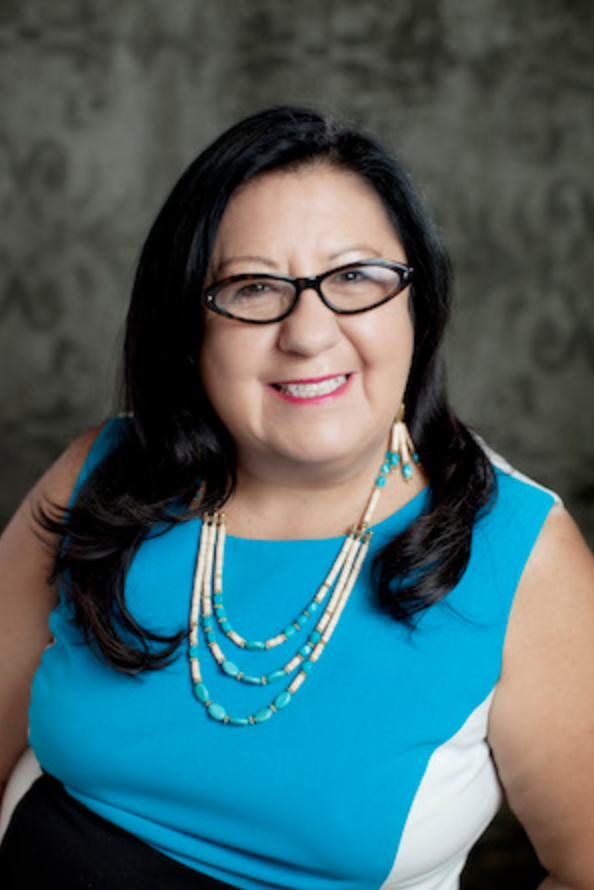
This week on Minnesota Native News, reporter Melissa Townsend talks with Mille Lacs Band of Ojibwe Chief Executive Melanie Benjamin about her visit with President Trump and her reactions to a new Executive Order on Missing and Murdered Native Americans and Alaska Natives.
Transcript
HOST INTRO: This week on Minnesota Native News, reporter Melissa Townsend talks with Mille Lacs Band of Ojibwe Chief Executive Melanie Benjamin about her visit with President Trump and her reactions to his new Executive Order on Missing and Murdered Native Americans and Alaska Natives.
[TAPE: THIS CALL IS NOW BEING RECORDED]
TOWNSEND: Thank you again for making some time. So I saw you at the White House, in the Oval Office…
[TAPE FROM OVAL OFFICE]
BENJAMIN: [laughs] That was interesting. And unexpected by the way. Apparently the call came in Friday, but nobody really checked until Monday.
TOWNSEND VOICEOVER: So she hopped on a plane and the next day Benjamin was at a photo-op in the Oval Office. That was Tuesday, November 26th.
TOWNSEND: Got it. And why do you think they invited you? I mean, I know you're a superstar, but… [laughter]
BENJAMIN: Don’t I wish that! I don't know any of the background, why I was chosen to come. I’m one of the longterm tribal leaders. I've been in office since 2000, so I've been involved in a lot of policy across Indian country, so that might be one of the reasons.
TOWNSEND:Did you expect to speak there on camera?
BENJAMIN: No, I did not.
[TAPE FROM THE OVAL OFFICE]
BENJAMIN: It was my understanding that it was really going to be just the witnessing of the signing of the executive order.
TOWNSEND: And why were you compelled to jump on a plane and fly to DC?
BENJAMIN: Well, it’s the topic - missing and murdered indigenous women and girls. This has been going on for far too long when we have our American Indian girls and women and others that are not on the radar screen in a sense, it doesn't take a high priority for law enforcement agencies.
TOWNSEND: So you're probably familiar with the task force. I'm not sure how comfortable you are being critical or, or optimistic. But let me just ask you frankly, how do you feel about the terms that are set out and and what this will look like?
BENJAMIN: Well, I think as we go along, they're going to be probably a lot of tribal consultation with this. Hopefully there is. Where the real experts can weigh in and talk about what this means and how to impact this topic.
TOWNSEND: I was talking with Sarah Deer who used to be here at Hamline-Michelle and now is at the University of Kansas.
TOWNSEND VOICE-OVER: Sarah Deer is a citizen of the Muscogee [Creek] Nation and a Professor at the University of Kansas. For over 25 years she has been working in law and public policy to end violence against women.
TOWNSEND: She has real concerns about it lasting only two years. Thinking like, well they'll hire somebody in these different offices, they'll figure out what they want to do and then it’ll be time's up. Do you have that concern also?
BENJAMIN: Yeah, I have a concern when there was a limited time to address this. But I think it gives us the opportunity as advocates in Indian country and tribal leaders to really press the importance of this and getting that continued in the manner that it needs to be done. Whether that's permanent legislation are however that should work.
TOWNSEND: Got it. Now you're saying hopefully and probably there'll be tribal consultation, so there are no tribal leaders on the task force?
BENJAMIN: Yea, we’ll have to look at that a little closer as well and see how we address that because I think anytime you have these kind of initiatives that you have to have - what are the resources needed and how are those going to be allocated.
TOWNSEND: Yeah, has a dollar number been put out there at all?
BENJAMIN: No, I haven't heard one. But for this to happen in Indian country is really a positive movement and we just need to perfect it in a sense. I think that's not necessarily the correct word, but …
TOWNSEND: Right. Do you have a sense of how this federal task force might interact with the state level task force?
BENJAMIN: Uh, no, not yet. I talked to Lieutenant governor just a little bit. As we move forward, I think that's gonna be one of our tasks to make sure that there is communication and involvement and partnerships and making sure that we move forward together.
TOWNSEND: Great. Alright, well, thank you again. I really appreciate the call.
BENJAMIN: Well, thank you.
MARIE ROCK/HOST: That was reporter Melissa Townsend and Mille Lacs Chief Executive Melanie Benjamine talking about the new federal task force on Missing and Murdered Indigenous Women.