
This week on Minnesota Native News we hear about a new book featuring a Red Lake elder, a new program promoting healthy food in Native communities and a new audio documentary about forced adoption in the 1950’s and 60’s.
Transcript
STORY #1 - SMSC Funds Vista Volunteers at Red Lake and Lower Sioux (1:35)
The Shakopee Mdewakanton Sioux Community is funding 21 Americorps [AMER-ih-core] VISTA volunteers to be Native Food Sovereignty Fellows.
The volunteers, will work in the Red Lake Nation and the Lower Sioux Indian Community here in Minnesota… and 8 other tribal communities nationally. The goal is recruit volunteers to work in their own tribal communities.
Lori Watso [WAHT- so] is a member of the Shakopee Mdewakanton Sioux Community and Chair of their Seeds of Native Health Initiative.
((WATSO: We’ve always known the importance of supporting the young people in our communities as they walk the path to become our future leaders. And now so important to encourage them to enter this area of work - as nutrition scientists, dieticians, agricultural producers, really the food people of our future. (:25) ))
The VISTA volunteer fellows earn up to 15-thousand dollars a year and money for college courses.
They will be building projects based on regional indigenous knowledge of food with.
Max Finberg is the Director of the Americorps VISTA program.
((FINBERG: One of the tribes that’s interested is starting a meat processing plant and so VISTA might be involved in helping them market that and reaching out to other producers who can sell their product that might be grass fed or organic or a little more specialty product. (:19) ))
Finberg also anticipates school and community garden projects.
Watso emphasizes whatever the project— it will be lead by the host tribe.
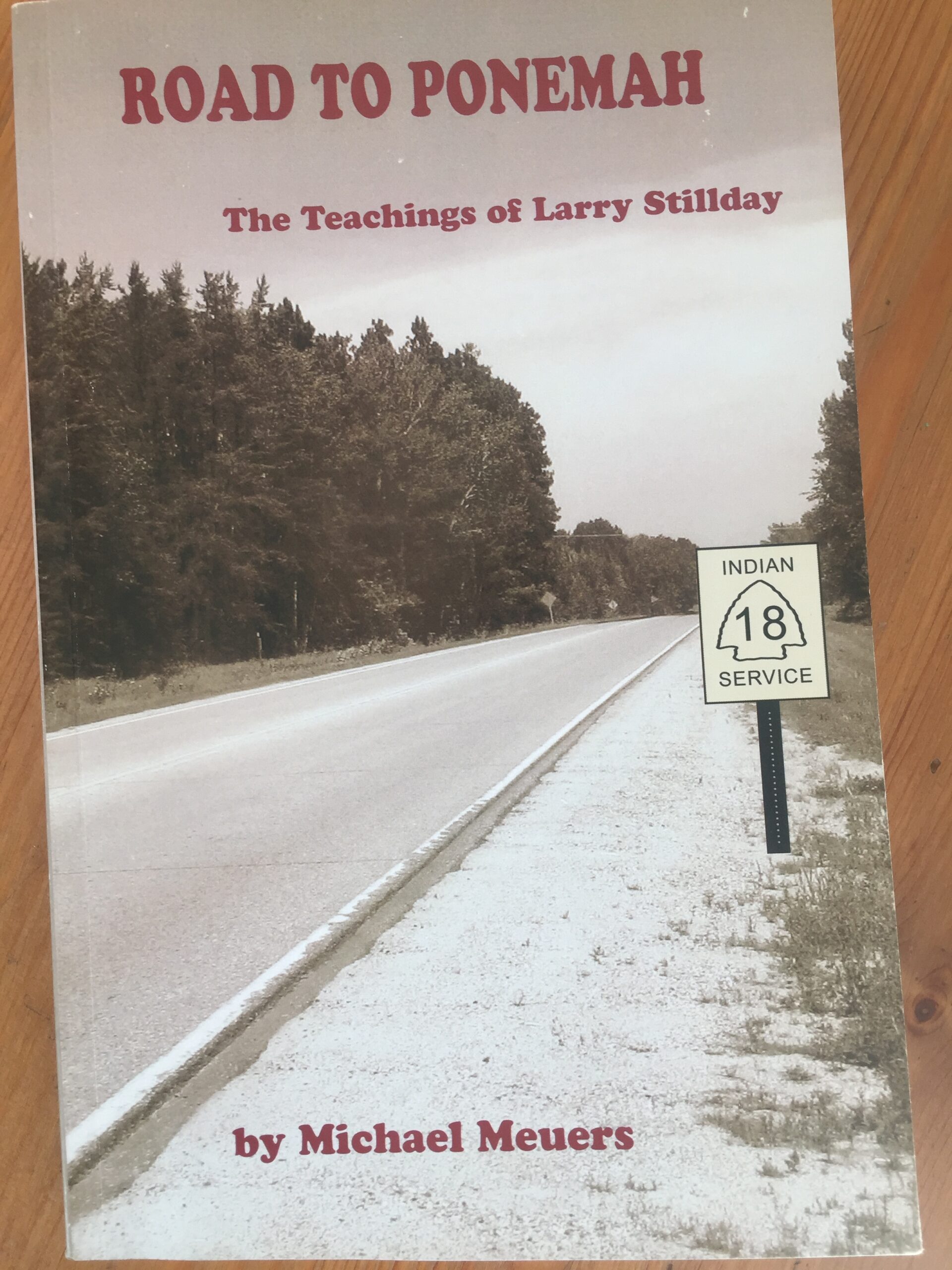
STORY #2 - NEW BOOK: ROAD TO PONEMAH (1:15)
Larry Stillday was a well-regarded spiritual leader and teacher from the Red Lake Nation.
He passed away in 2014.
But his words and teachings are compiled in a new book entitled Road to Ponemah.
Michael Meuers [MEERS] is the book’s author.
He is not Native, but he had a close relationship with Larry Stillday.
And spent many hours learning from the Ojibwe elder.
((MEUERS: There was just a manner about him, the really mellow and… I can remember …we were at this……, a culture camp, language camp for kids out at the Ponemah roundhouse, and I mention it in the book. At the end of this three day camp, there are a bunch of rambunctious kids between the ages of 5 and 14 maybe, just 50 or 60 of them and we’re under this big tent, but Larry stood up and started talking and all these kids they just shut up and Larry started talking and they just listened. The guy had a gift, in my view, from my view, and I’m really happy to share that. and that’s what it’s really all about. (:48) ))
Meuers says that’s what the book is all about - to share the wisdom of Larry Stillday with everyone.
STORY #3 - STOLEN CHILDHOODS DOCUMENTARY (2:00)
A new audio documentary called Stolen Childhoods, which explores the legacy of forced adoption of Native children into white families.
Melissa Townsend tells us more.
(([documentary audio] OLSON: My mom was adopted. At least that’s what the government says happened. Me, I call it something else, not adoption though. Removal… theft? (:18) ))
In a new audio documentary Melissa Olson leads a group of women talk with their moms who were taken as children from their Native families and adopted into white families…
This is Melissa’s mom, Judy Olson.
((OLSON MOM: A social worker came and said, you know, if you don’t start taking to these people we are going to take you back. Either you start calling these people mom and dad and start showing some affection and act like you want to be here, then we are going to take you away again. I’m like 7 or 8 and I’m going, why is this my problem? (:22) ))
Melissa Olson says she wanted to tell people about the Minnesota state sponsored adoption project in place in the 50s and 60s.
And she wanted to explore how it is affecting her generation.
((OLSON: Some of what happens to our parents is transmitted to us, their children. (:08) ))
Lynn Braveheart worked with Melissa on the documentary. When her mother was 4, she was adopted away from her Oglala Sioux tribe.
((LYNN: I was in child protection and aged out of foster care as a teenager, but her stories have always been impactful to me because it explains the reasons for her chemical dependency or alcoholism, her homelessness, the abuse we suffered as kids. (:19) ))
The documentary first aired on KFAI, but you can hear it at soundlcoud.com search for Stolen Childhoods.
Melissa and Lynn plan to present the documentary in February at the American Indian Studies Association conference Albuquerque New Mexico.
For Minnesota Native News, I‘m Melissa Townsend.