
Today, a northern community college looks to the environment for new workforce initiatives. Some metro area organizations are providing vital information to vulnerable communities. And new rules on the roads may have you checking your rear-view mirrors more often.
Transcript
[sound element: NSS intro theme]
HOST: You're listening to North Star Stories: Voices from Where We Live, a daily newscast about what it means to live in Minnesota.
ANCHOR: Today, a northern community college looks to the environment for new workforce initiatives. Then, some metro area organizations are providing vital information to vulnerable communities. And new rules on the roads may have you checking your rearview mirrors more often.
I'm Chantel SinGs.
White Earth Tribal and Community College is looking to tackle northern Minnesota's skilled labor shortage. The effort includes investment in a new building on its Mahnomen [muh-no-men] campus and supporting clean energy initiatives. The facility will offer training in heating and cooling, plumbing, welding, construction, and renewable energy, including a new associate degree focused on climate adaptation. The college is also launching energy auditor training to meet regional workforce needs in partnership with the Minnesota Commerce Department. Student leaders say the project could help keep Indigenous graduates in their communities. The college still has to raise some of the funding for the program.
Coming up, as immigration enforcement increases, some Twin-Cities-based organizations are increasing efforts to provide resources, information, and support to immigrant communities. Katherine DeCelle has the story.
Katharine DeCelle
Last month, a Twin Cities-based organization held a training for community members on how to respond to Immigration and Customs Enforcement or ICE raids. Outside a St Paul Recreation Center, a light rain started as attendees filed into the brownstone building. Organizers told members that they could not record or interview anyone during the training. Minnesota is home to roughly 500,000 immigrants. Mexican and Somali immigrants account for 100,000 of those. In response to the federal administration's escalated crackdown on immigration, local organizations like UNIDOS Minnesota have been training community members on what to do when they or neighbors are detained by ICE.
Luis
A lot of these organizers are holding two types of trainings around the state, and so we have our Know Your Rights trainings, Conocer Derechos. Right now we have them in English and Spanish, and then the second is the raid response training.
Katharine DeCelle
Luis is the communications director of Unidos, an organization that focuses on immigration, the environment and worker protections.
Luis
The rate response training allows for allies and accomplices to come into these spaces and find out about our Raid Response Network, how they're able to plug in and become legal observers.
Katharine DeCelle
The Immigration Law Center of Minnesota, also based in the metro area, has been doing similar work.
Julia Decker
We did immigration legal work in the first Trump administration, you know, and before, and then also after. And so we certainly have experience in working ina very hostile immigration climate.
Katharine DeCelle
That's Julia Decker, the policy director at Immigrant Law Center of Minnesota, a nonprofit organization that provides free immigration legal representation to low-income immigrants and refugees.
Julia Decker
But of course, things are continuing to change very rapidly. And so in additionto the direct service, we are doing community education and trainings around knowing your rights, as well as just educating the general public about the immigration system.
Katharine DeCelle
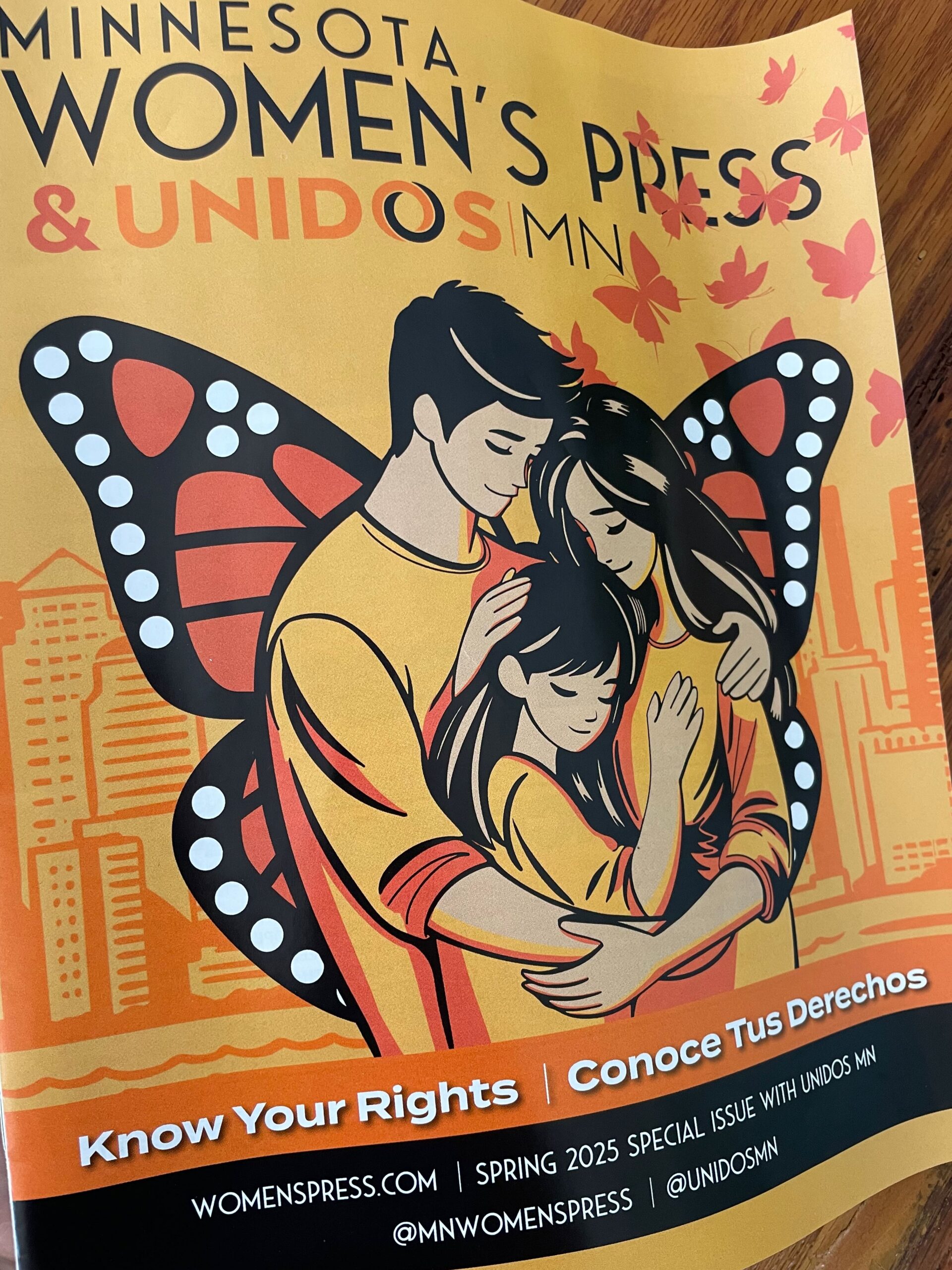
Attendees of UNIDOS Raid Response trainings left with Know Your Rights booklets. The organization also partnered with Women's Press to publish a 28-page bilingual magazine with similar information. Luis says that having something in writing can be helpful.
Luis
It's a special edition on Know Your Rights. So there's information on how to navigate ICE encounters at home, in workplaces, checkpoints and day to day, things that you might need to know.
Katharine DeCelle
To read the UNIDOS Know Your Rights edition of Women's Press, visit womenspress.com. This is Katharine DeCelle for North Star Stories.
ANCHOR
You are listening to North Star Stories.
Watch for motorcycles. Starting July first, Minnesota is legalizing lane splitting and lane filtering for motorcycles. Under the new law, riders will be allowed to split lanes — or ride between two lanes of traffic — as long as they don't go faster than 25 miles per hour or 15 miles per hour faster than surrounding vehicles. Riders will also be allowed to lane filter, or move through stopped traffic to get to the front of the pack.
Drivers who intentionally block motorcyclists from filtering will be penalized. Minnesota became the sixth state to legalize lane splitting after Governor Walz signed the bill into law last year.
[sound element: NSS outro theme]
HOST: North Star Stories is produced by AMPERS, diverse radio for Minnesota's communities, with support from the McKnight Foundation and the State of Minnesota. Online at ampers dot org.