
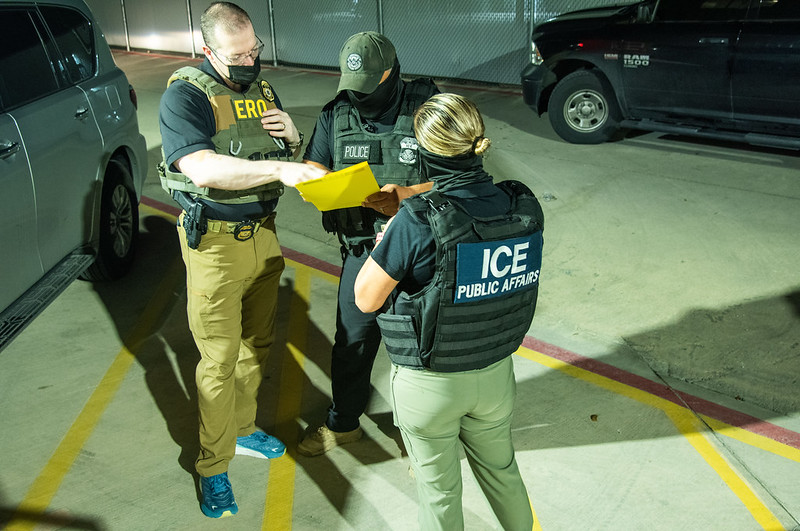
As immigration enforcement intensifies in Minnesota and new laws emerge at both state and federal levels, immigrant communities increasingly rely on local nonprofit organizations and community resources for guidance and support. This segment explores the challenges faced by immigrants, the efforts of advocacy groups, and the legislative landscape shaping immigration policy in the state.
Transcript
Victor Palomino: Immigrant communities in Minnesota are experiencing an increased presence of ICE, the US Immigration and Custom Enforcement agency as the current administration moves forward with its mandate to expand deportations.
Julia Decker: ICE has always been active in various places, including Minnesota, and so part of what we are seeing now, I think, is also just a closer attention being paid to might that official vehicle be ICE, and what should we do about it? So there's a lot of different working tables that are happening between like us and other partners, legal service organizations. We sort of call it the hub. We are doing community education and trainings around knowing your rights, as well as just educating the general public about the immigration system.
Victor Palomino: That's Julia Decker, policy director at the Immigrant Law Center of Minnesota, a nonprofit organization that provides free immigration legal representation to low-income immigrants and refugees in Minnesota and North Dakota. Their educational training provide information on how to respond when encountering immigration officers in various situations.
Julia Decker: If a person is identifying themselves as an ICE or law enforcement official, you have a right not to open the door if they don't have a warrant and that they don't have a warrant that's signed by a judge, you have the right to remain silent. You have the right to ask for an attorney.
Victor Palomino: The crackdown on immigration enforcement is also making its way to the state capitol. Representative Max Rymer, Republican, from District 28B has introduced a bill that will prohibit any state official from interfering with federal immigration agents. Here is representative Rymer presenting the bill at the March 12 Public Safety Committee hearing.
Representative Max Rymer: This bill, it accomplishes two main things. The first is that it mandates any illegal immigrant arrested on suspicion of a violent crime, even in cases where the county attorney elects not to prosecute, be reported to ICE. Secondly, this bill prevents state and local entities from actively prohibiting, restricting or interfering with federal immigration authorities and carrying out the federal immigration enforcement. What the motive is for this bill is to open up a line of communication between local authorities and dealing with dangerous criminals who should not be in our community.
Victor Palomino: During the hearing, the bill received response from committee members, including Representative Athena Hollins from District 66B.
Representative Athena Hollins: And what I'm concerned about is, in my experience, people use the lack of documentation for immigrants as a weapon. When a man has a child with a woman who is undocumented, he uses her status as a weapon against her. And so when I look at this bill, I'm looking at section two, which is not about violent offenders, it's simply about the state, any city/county official not allowed to withhold information from ICE.
Victor Palomino: An encounter with immigration officers can be just the beginning of a complicated legal process. Julia Decker explains.
Julia Decker: So when somebody is arrested, eventually they will end up in a detention center either that's either run by ICE through a private company, or in a county jail or state facility that contracts with ICE to hold people for an immigration custody, which is confusing sometimes, because immigration detention is civil detention, even though it's happening maybe in the same facility as people who are incarcerated for crimes. But I think it's important to emphasize that people who are detained by ICE, whether it's a county jail or a private facility, are not under criminal detention.
Victor Palomino: Some of the recommendations for immigrant communities are to memorize phone numbers and have resources available on hand, like the Immigrant Law Center of Minnesota, intake and detention hotline, or the immigration help training schedule, which can be found at ilcm.org.
Julia Decker: Getting an attorney is also really important. The government will not provide one in immigration proceedings, unlike in regular criminal cases, there's no like public defender model.
Victor Palomino: As the current administration continues reshaping immigration enforcement nationwide, immigrant communities in Minnesota are turning to local nonprofit organizations and community resources for guidance and support for North Star stories and Victor Palomino.