
Today, why Minnesota may cut the statewide walleye limit. Then, how art and nature mix in a new statewide program. And, why MnDot is turning off the lights on a Winona bridge.
—–Executive Producer: Victor Palomino Producer: Jamad Jama Anchor: Grace Jacobson Reader scripting: Xan Holston, Joel GlaserFact checking: Joel Glaser, Victor Palomino Editorial support: Emily Krumberger Mixing & mastering: Chris Harwood
Transcript
[sound element: NSS intro theme]
HOST: You're listening to North Star Stories: Voices from Where We Live, a daily newscast about what it means to live in Minnesota.
ANCHOR: Today, why Minnesota may cut the statewide walleye limit. Then, how art and nature mix in a new statewide program. And, why MnDot is turning off the lights on a Winona bridge.
I'm Gracie J.
The Minnesota Department of Natural Resources might lower the statewide walleye possession limit from six to four fish. Officials say the change is a proactive step to preserve quality fishing, citing changing lake conditions and new fishing technology that makes fishing more effective. The current six-fish limit has been in place since 1956. But many of Minnesota's top walleye lakes already have lower limits, and the DNR says reducing the statewide cap would create more consistency. If approved the new limit wouldn't take effect until May 2027. The public comment period runs through August 15.
Up next: Artists across Minnesota are turning parks into their creative spaces through the Minnesota Parks Artists in Residence Program. Producer Jamad Jama brings us a story about how public art, nature, and the community are coming together for the perfect combination.
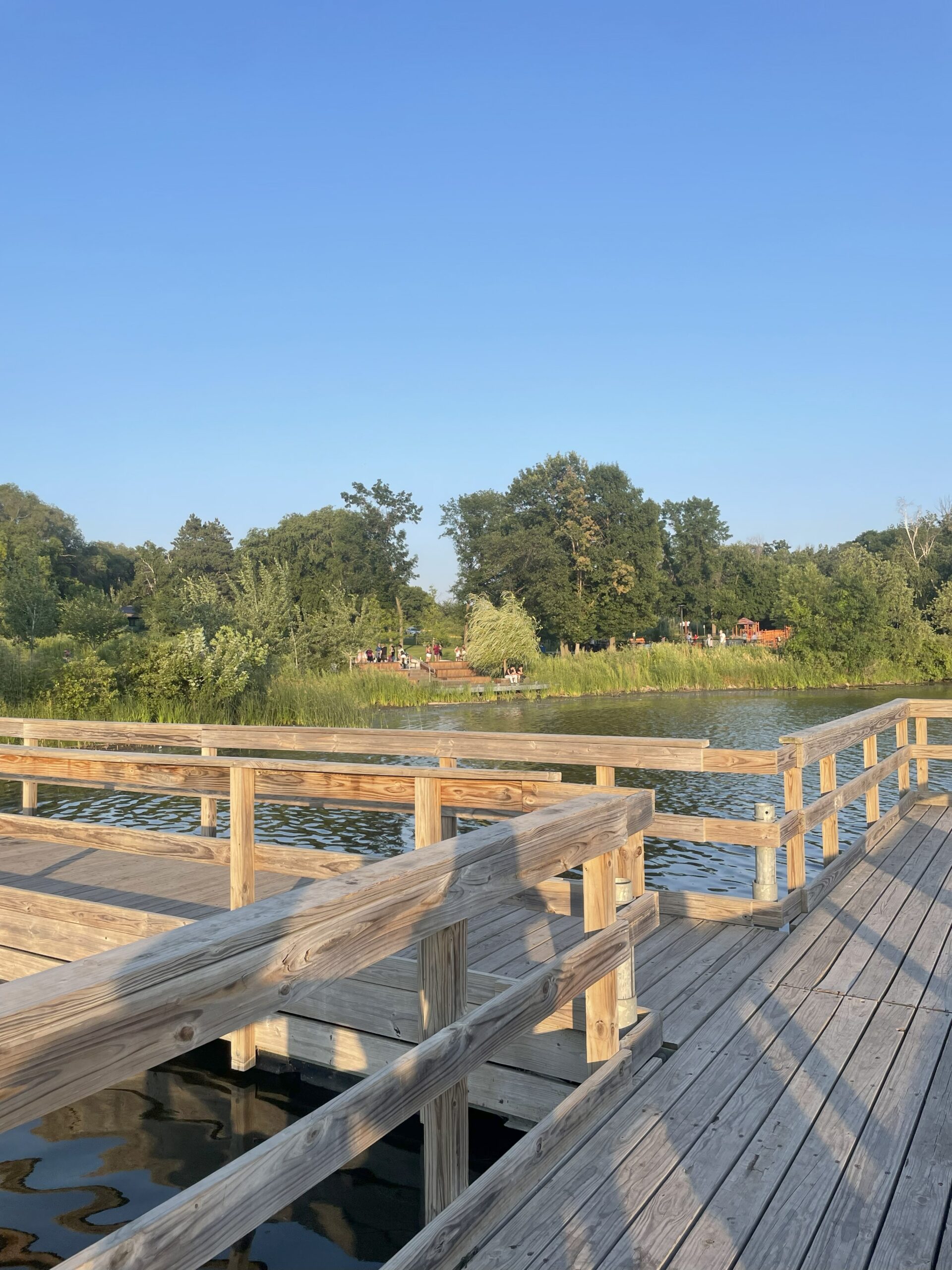
Jamad Jama: You picture this. You're walking a trail enjoying the beautiful summer weather, and suddenly you stumble on a sculpture, a painting or a performance that makes you pause and think. That's the purpose of the Minnesota Parks Artists in Residence Program, a yearlong project placing artists into parks across the state to create accessible, community-centered pieces in nature.
Ifrah Mansour: I'm just in love with this program. I'm imbuing the sense of abundance that we experience from nature, and what a time to be exploring that.
Jamad Jama: Ifrah Mansour, a Somali-American sculptor with a gift for weaving, is one artist who joined the program last year, and is wrapping up her residency this summer.
Ifrah Mansour: I had the lovely experience of journeying throughout the Mississippi Greenway. And I loved what I discovered. I found myself being in new places that I've never been before.
Jamad Jama: The Minnesota Parks Artists in Residence Program, or MNPAIR, is uniting 12 artists from around the state to bring art to where people already are. And it's this blend of artists and settings that transform an ordinary park visit into a reflective experience.
Ifrah Mansour: It's beautifully all over the place. So all artists are having different events. So it's multiple offerings, because it's multiple places.
Jamad Jama: Ifrah is creating an installment that is focused on the community, and it incorporates everyday objects and weaving to symbolize familiarity. Her sculpture will be completed with public participation, weaving her vision with community offerings of daily life.
Ifrah Mansour: So my project is called Weaving Abundance. It is a multi-site participatory public art, projects that are utilizing everyday items, such as eggshells, coffee grounds, loose tea leaves.
Jamad Jama: The park goers aren't just meant to observe. They're also invited to take part.
Ifrah Mansour: The adventure begins with community workshops. That starts in July 26 and 27th. I'm so obsessed with the idea of seeing art growing. So that's the feel and the energy we're going to have.
Maya Atem: I think it's going to be really special for the community.
Jamad Jama: For park goers like Maya Atem, these pieces aren't just decoration. They become part of the park and serve as a reminder that art can happen anywhere, for anyone.
Maya Atem: It's really important to me that art is accessible for everybody, and like embracing nature because it's so beautiful and it's all around us.
Jamad Jama: The MNPAIR project spans across the state with beautiful installations blooming in every corner beyond the Twin Cities. Projects are underway in places like Lake Bemidji State Park in northern Minnesota, as well as Granite Falls Memorial Park in southwest Minnesota. To learn more about the artists participating, or to see what's happening in a park near you, visit ForecastPublicArt.org. For North Star Stories, I'm Jamad Jama.
ANCHOR: You are listening to North Star Stories.
Drivers crossing the Highway 43 bridges in Winona will notice things are a little darker the next few weeks. The Minnesota Department of Transportation is shutting off the lights on the bridges until the mayflies are done hatching. Mayflies are attracted to the lights and can cause the roadway to become incredibly slippery. The mayflies were already starting to accumulate on the bridge before MnDot turned off the lights. The insects can get so bad at times that some cities have to use snowplows to clear them from the roads to prevent crashes.
[sound element: NSS outro theme]
HOST: North Star Stories is produced by AMPERS, diverse radio for Minnesota's communities, with support from the McKnight Foundation and the State of Minnesota. Online at ampers dot org.