
Today, we begin our weeklong series of special reports recognizing the fifth anniversary of the murder of George Floyd…an event that reshaped our state.
Transcript
[sound element: NSS intro theme]
HOST: You're listening to North Star Stories: Voices from Where We Live, a daily newscast about what it means to live in Minnesota.
ANCHOR: Today, we begin our weeklong series of special reports recognizing the fifth anniversary of the murder of George Floyd – an event that reshaped our state. I'm Chantel SinGs.
Five years ago this past Saturday, Minnesota attracted international attention when then-Minneapolis police officer Derek Chauvin murdered George Floyd. The killing ignited protests and demonstrations across Minnesota and the country, with demands for justice, accountability, and change. Five years later, the community continues to heal.
This week, North Star Stories presents a series of special reports reflecting on the impact the murder of George Floyd has had on our state. Each day, we'll explore a different perspective on how the event has reshaped Minnesota's identity.
Katharine DeCell begins our special series by taking us to George Floyd Square.
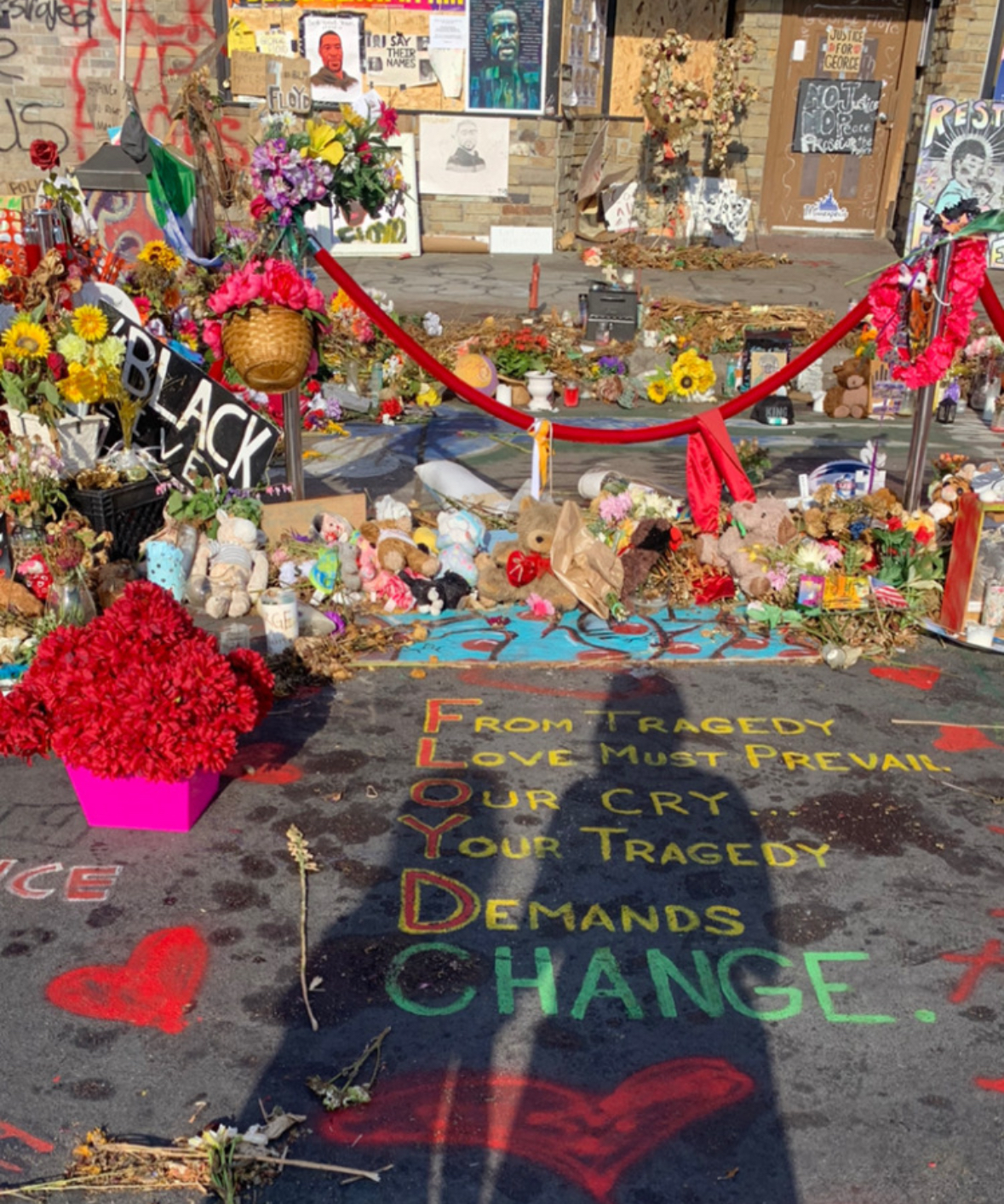
Katharine DeCelle: Five years after George Floyd's murder, the site known as George Floyd Square in Minneapolis remains a sacred space filled with murals, flowers, candles and personal items left by visitors. The intersection has been closed to traffic at times to serve as a community space of remembrance and the ongoing fight for justice. Community members have differing views on what should happen next.
Andrea Jenkins: I represent the district where George Floyd was murdered.
Katharine DeCelle: Council member Andrea Jenkins.
Andrea Jenkins: I want to see the infrastructure rebuilt in that community.
Katharine DeCelle: Despite the efforts of the city and community members. Jenkins says the physical space around the memorial is not well maintained.
Andrea Jenkins: There's a makeshift clothing shelf that is in a bus shelter, and it always is just clothes thrown all around the ground. There's litter. If we are going to signify that Black Lives Matters, then we should have a memorial that reflects that.
Katharine DeCelle: For other community members like Jeanelle Austin, people are more important than the development of the space.
Jeanelle Austin: The eye on development for George Floyd Square, to me, the distraction around the real conversations about injustices that continue to exist.
Katharine DeCelle: Jeanelle Austin was living in Texas at the time of George Floyd's murder, but moved back to Minnesota to help her community.
Jeanelle Austin: My family home is just two blocks away from where George Floyd took his last breath.
Katharine DeCelle: Jeanelle says that her form of protest was tending to and caretaking of the memorial site.
Jeanelle Austin: I have a background in theology. There's just some of us in the world who are wired to tend to sacred spaces.
Katharine DeCelle: This led to Janelle, with the support of George Floyd's aunt and cousin, to found Rise and Remember, a nonprofit formed to share the stories and spaces of resistance to racial injustice.
Jeanelle Austin: Caring for one another, supporting one another is far more important than whatever anything looks like or how anything develops and changes.
Katharine DeCelle: Council member Jenkins says she's appreciative of the work that community members have done at the memorial, but still wants George Floyd Square to be redeveloped.
Andrea Jenkins: The City of Minneapolis purchased the gas station, which was formerly the Speedway.
Katharine DeCelle: The former gas station sits abandoned across the street from Cup Foods where George Floyd was killed.
Andrea Jenkins: We purchased that property to turn it over to a community group to make sure that it didn't fall into corporate hands.
Katharine DeCelle: Jenkins says that currently three community organizations, including Rise andRemember, have proposals into the city in hopes to get the contract. If Rise and Remember were to acquire the lot, the organization would transform it into a community center with a memorial garden.
Andrea Jenkins: Yes, we need to give time to heal, to mourn. On the other hand, we need to make sure that our community is getting the necessary improvements.
Katharine DeCelle: According to Jenkins, by June, the city should know which community organization gets the property. While Janelle's and council member Jenkins's visions for justice and healing may differ from one another, many people continue to visit the site to honor Floyd's memory. Five years later, the story of the square is still being written. For North Star Stories, I'm Katharine DeCelle.
ANCHOR: Be sure to tune in all week for our special reports looking at how our state has changed in response to the murder of George Floyd. You are listening to North Star Stories.
[sound element: NSS outro theme]
HOST: North Star Stories is produced by AMPERS, diverse radio for Minnesota's communities, with support from the McKnight Foundation and the State of Minnesota. Online at ampers dot org.