
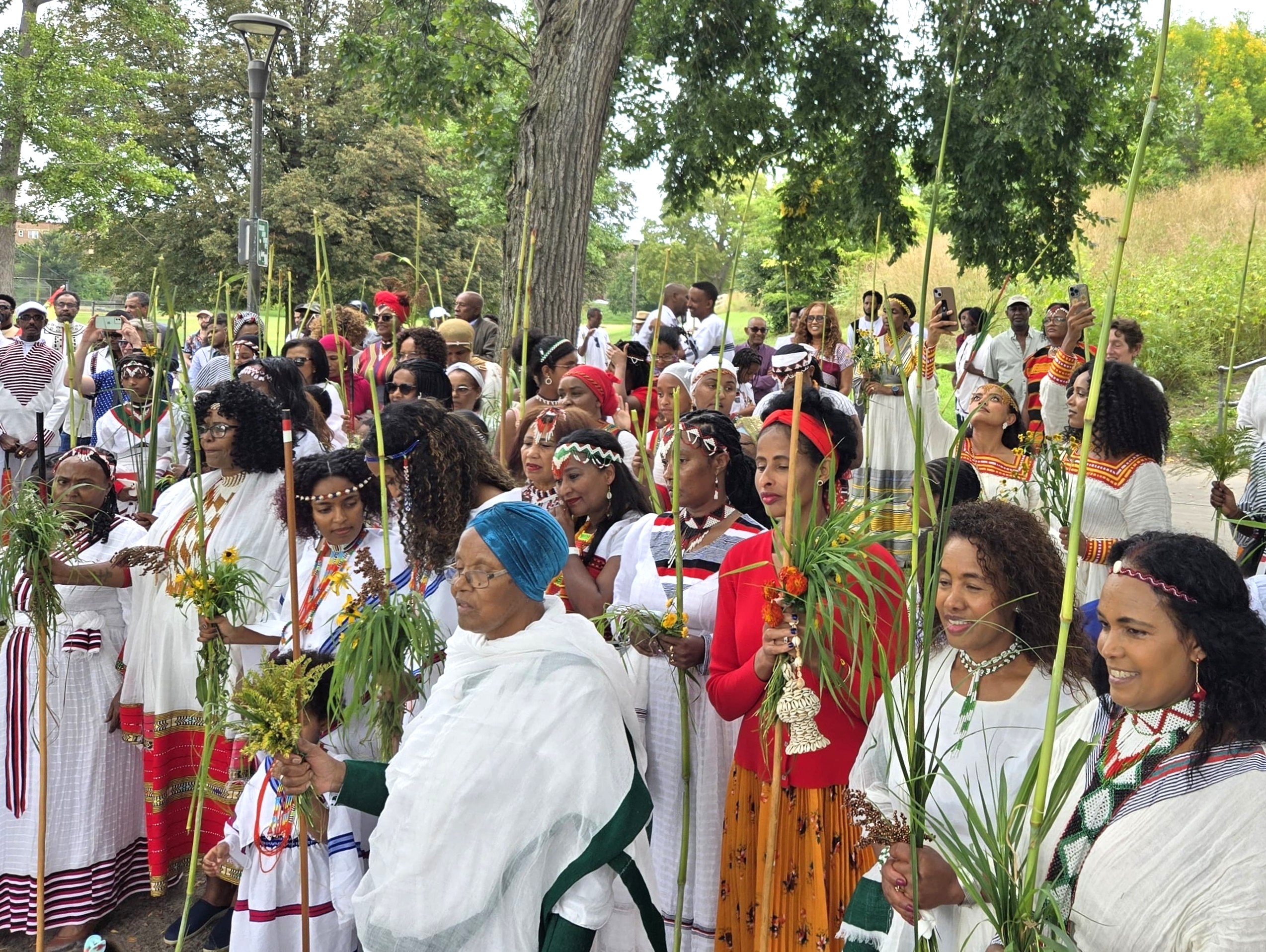
The Oromo community celebrates the changes of season. Then, a new report raises concerns about the fossil fuel industry. And, crane migration peaks in east-central Minnesota.
—–Executive Producer: Victor Palomino Producer: Faaya AdemAnchor: Chantel SinGsReader scripting: Victor Palomino Fact checking: Joel Glaser, Victor Palomino Editorial support: Emily Krumberger Mixing & mastering: Chris Harwood
Transcript
[sound element: NSS intro theme]
HOST: You're listening to North Star Stories: Voices from Where We Live. Today in Minnesota…
ANCHOR: …a new report raises concerns about the fossil fuel industry. Then, we learn how an African immigrant community in Minnesota celebrates the changes of season. And crane migration peaks in east-central Minnesota.
I'm Chantel SinGs.
A new report is raising concerns about the negative impacts of oil and gas drilling. More specifically, the effects it's having on the state's Black, Latine, Indigenous, and low-income communities. The report aims to bring attention to those impacted by the fossil fuel industry and the financial institutions responsible for financing, insuring, and investing in it. This is the fifth report from the Women's Earth and Climate Action Network, a climate justice organization established to engage and unite women worldwide. The organization released its inaugural report in 2021.
In today's main story, every year, millions of the Oromo people gather in Ethiopia to celebrate Irreechaa, a festival that marks the change of seasons. Reporter Faaya Adem explains the importance of the holiday for the Oromo community here in our state.
Faaya Adem: Irreechaa is one of the largest festivals in East Africa, drawing millions to celebrate the beginning and end of the rainy season. In Minnesota, the Oromo community gathers in May and September to honor this centuries old tradition.
Teferi Tafa: Irreechaa is Oromo Thanksgiving.
Faaya Adem: Teferi Tafa is an Oromo novelist and professor at University of Northwestern in St Paul. He says the festival was traditionally announced with a signal fire and marked by gatherings at rivers or mountains.
Teferi Tafa: The religious leader's duty is to look. For example, the Oromo calendar depends on lunar, on the star, on the moon, and so he calculates that, and then says, "Tomorrow will be Irreechaa."
Faaya Adem: Irreechaa is also a symbol of survival for many Oromos. In the nineties, thousands of Oromos fled to Minnesota due to political marginalization in Ethiopia.
Talile Gobena: It's a symbol of, you know, resilience. This is something that maybe in the last, in Ethiopia, and for about 100 years or so, celebrating this was looked down upon, and it had gone underground in a lot of places or people had stopped doing that.
Faaya Adem: Talile Gobena is a volunteer on the marketing committee for the Minnesota-based Irreechaa organization.
Talile Gobena: Within it, it has a message of renewal, asking for forgiveness, thanking. So, taking some pause and time to say thank you. All of those kind of things are in the concept of what it means to be an Oromo, and therefore people look at it as like almost a symbol of our identities.
Faaya Adem: Oromos in Minnesota gather at a selected park in the Twin Cities to celebrate. People attend in cultural clothes and sing and dance to traditional songs, a badenna dinner (a sour pancake-like flatbread).
Tolcha Gemechu: If there's Oromos, even in few numbers, they still celebrate.
Faaya Adem: Tolcha Gemechu is a board member for the Irreechaa organization. He says Oromo youth are a big part of Irreechaa becoming popular.
Tolcha Gemechu: Our youth in college and universities are looking at their background and history and why Oromo do that in the tradition and the belief and the hope that Irreechaa gives in the reason we do. They even teach other non-Oromo.
Faaya Adem: Here in Minnesota, Irreechaa stands as a reflection of the Oromo community's growth. For North Star Stories, I'm Faaya Adem.
Anchor: You are listening to North Star Stories.
It's migration season at the Sherburne National Wildlife Refuge, in east-central Minnesota, where thousands of sandhill cranes are making their annual stopover on their journey south. From mid-October through early November, huge flocks of these prehistoric-looking birds gather to roost in the wetlands overnight and forage in nearby farm fields during the day. A crane viewing map and tips are available on the Friends of Sherburne website at ExploreSherburne.org. The Friends of Sherburne group is hosting an online Sandhill Celebration fundraiser to help protect crane habitats and support education programs.
[sound element: NSS outro theme]
HOST: North Star Stories is produced by AMPERS, diverse radio for Minnesota's communities, with support from the McKnight Foundation and the State of Minnesota. Online at ampers dot org.