
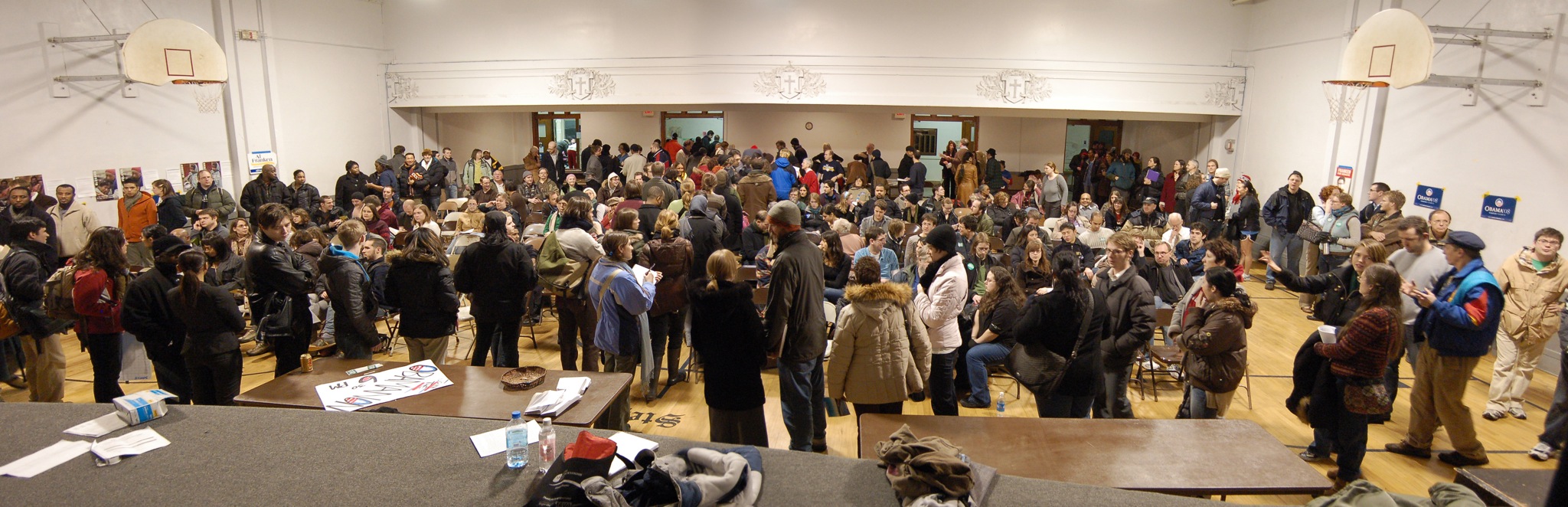
We take a look at Minnesota’s precinct caucus process. Then, the state honors a fallen wildland firefighter. And an award-winning restaurant is moving to the Guthrie Theater.
—–Executive Producer: Victor Palomino Producer: Ngoc BuiAnchor: Grace JacobsonReader scripting: Victor Palomino Fact checking: Joel Glaser, Victor Palomino Editorial support: Emily Krumberger Mixing & mastering: Chris Harwood
Transcript
[sound element: NSS intro theme]
HOST: You're listening to North Star Stories: Voices from Where We Live, a daily newscast about what it means to live in Minnesota.
ANCHOR: We take a look at Minnesota's precinct caucuses. Then, the state honors a fallen wildland firefighter. And an award-winning restaurant is moving to the Guthrie Theater.
I'm Gracie J.
Governor Tim Walz is honoring wildland firefighter Isabella "Bella" Grace Oscarson. She died in the line of duty on September 26th. Walz praised Oscarson's courage and dedication, saying her service protected people and nature across Minnesota, Idaho, and beyond. Oscarson served with the Minnesota Conservation Corps, the DNR, and the Idaho Department of Lands.
Next, Political parties in Minnesota use Precinct caucuses. But for many, questions remain about how the process works. For part two of our election coverage, Ngoc Bui brings us closer to the state's precinct caucuses.
Ngoc Bui: So you may think of voting when it comes to elections. But there's a lot that happens long before Election Day in Minnesota. It all starts with precinct caucuses. There's even a song in Alice in Wonderland about these events. It's called caucus race, and in the cartoon, the characters are running around in circles with no clear end. In reality, though, these caucuses have a very clear and important purpose.
Kathleen Cole: So this is really about shaping who are the people who represent the party in leadership, but it's also about shaping what are the policies that our party is going to stand for.
Ngoc Bui: Kathleen Cole is a political science professor at Metro State University. Cole says caucuses are also about choosing delegates for higher level party conventions. In Minnesota, there are only two major political parties that can run these neighborhood level caucuses. The Democrats and the Republicans. She said caucuses are what make Minnesota's political system unique.
Kathleen Cole: You know, the reason that we have such a history of progressivism in the state of Minnesota and that we're able to elect progressive candidates that have a lot of grassroots support is enabled by our caucus system.
Ngoc Bui: Cole says this grassroots element also makes caucuses different than primaries. Primary elections are when people go to vote for who should represent their party for particular races. Minnesota currently only holds primaries for presidential races. Local and state races are shaped by precinct caucuses.
Kathleen Cole: A primary system favors candidates with money. But you know, because we have this caucus system, it's easier for candidates who have relationships in their communities, who are organizers but don't necessarily have a lot of money, it's a lot easier for them to get elected.
Ngoc Bui: Despite how fundamental these events are Roberta Kurth, a long-time caucus participant, says there isn't much awareness about them.
Roberta Kurth: What annoys me the most is that people really don't know what a caucus is, and so there's such a low turnout, and they think it's not important.
Ngoc Bui: Kurth has been involved with the Republican Party in Wabasha County for more than 40 years. She has also volunteered to organize caucuses for her precinct. Kurth went to her first ever precinct caucus back in the '70s when abortion was a hot button issue because the Supreme Court had just ruled on Roe v Wade. After all these years, she remains passionate about caucusing, because Kurth says it is where everything begins.
Roberta Kurth: You see how they started in your caucus. They move up to the next convention, and then they go to the state convention, and then perhaps maybe even the national convention. You can see things move through the system.
Ngoc Bui: She's set to volunteer again for the next round of caucuses, which will take place on February 3 of next year. This is Ngoc Bui for North Star Stories.
ANCHOR: You are listening to North Star Stories.
The award-winning restaurant Owamni will move to the Guthrie Theater in downtown Minneapolis in spring 2026. Owamni will occupy the theater's main floor, doubling its current space and continuing to showcase traditional Indigenous cuisine. Restaurant founder and chef Sean Sherman said the relocation will strengthen connections to Native food practices and the Mississippi River, while the Guthrie Artistic Director calls the partnership a milestone for the theater and the riverfront. The move aims to welcome more diners and expand cultural and educational programming.
[sound element: NSS outro theme]
HOST: North Star Stories is produced by AMPERS, diverse radio for Minnesota's communities, with support from the McKnight Foundation and the State of Minnesota. Online at ampers dot org.