
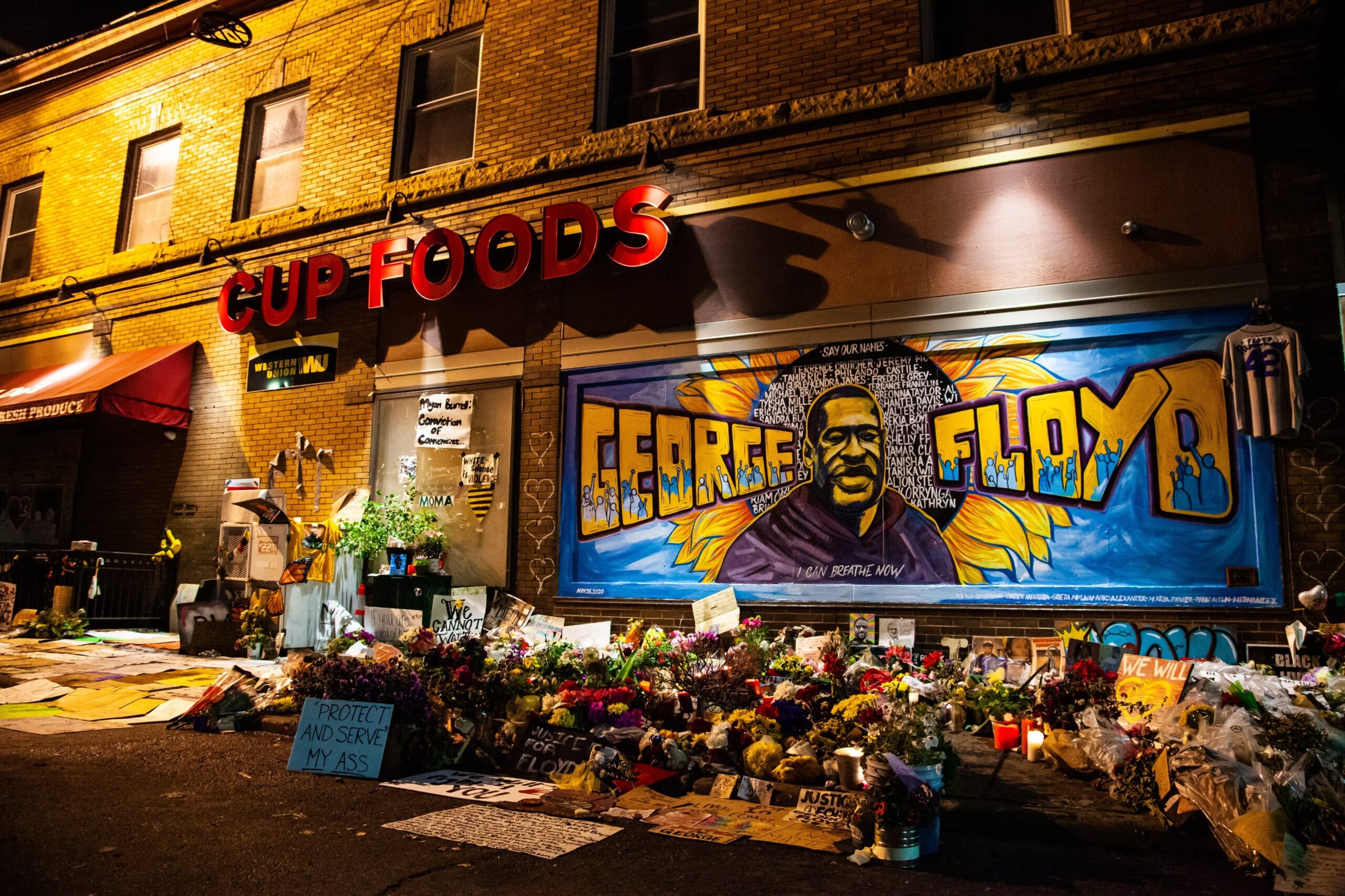
In today’s segment, how Brooklyn Center is reshaping its approach to public safety. Business owners talk about the impact George Floyd’s murder is still having today. And, new career programs that will help get students into the workforce faster.
Transcript
[sound element: NSS intro theme]
HOST: You're listening to North Star Stories: Voices from Where We Live, a daily newscast about what it means to live in Minnesota.
ANCHOR: In today's segment, how Brooklyn Center is reshaping its approach to public safety. Business owners talk about the impact George Floyd's murder is still having today. And, new career programs that will help get students into the workforce faster. I'm Gracie J.
Four years after Brooklyn Center police officer Kim Potter killed Daunte Wright during a traffic stop, the city council has approved a controversial new public safety commission. The commission is part of a broader public safety overhaul, which has faced delays and political pushback since it was introduced. The seven-member council will advise city leaders on public safety concerns, but won't be allowed to review police union contracts or protest responses. Critics say the changes strip the commission of real oversight.
Next, local businesses are still being impacted by George Floyd's murder. Jose Ozoria talks to business owners and community leaders about what things are like today.
Archival Audio: Eat, bro, you got him down, man, let him breathe.
Jose Ozoria: The brutal murder of George Floyd set off a series of events that impacted the City of Minneapolis in ways that are both overt and less obvious. The impact on the businesses around the intersection of 38th Street and Chicago Avenue is one striking example. 38th Street and Chicago Avenue, where George Floyd's murder took place, has a long history as a hub of commerce.
PJ Hill: So the history has been really rich with black ownership and entrepreneurship. Lately, it doesn't reflect that.
Jose Ozoria: PJ Hill is the advice and Strategic Development Director at North Rock Partners and a business owner at 38th Street and Chicago Avenue.
PJ Hill: So if you go 10 blocks up to 48th in Chicago, you can see it's a thriving business little corridor. We don't have that same feel in 38th and Chicago.
Jose Ozoria: The impact of businesses hit close to home for Mr. Hill.
PJ Hill: My partner owned the building right there on 38th and Chicago, and he had a tenant Dragon Wok. They were absolutely killing it. After the death of George Floyd, they went all the way down. Michael Healy is the lead lawyer for nine businesses on 38th Street and Chicago Avenue, including Cup Foods.
Michael Healy: I have several businesses who are starting to make some good money before Mr. Floyd was killed.
Jose Ozoria: Now these businesses are suing the city.
Michael Healy: What precipitated the lawsuit was three actions by the city. One, of course, is the murder of George Floyd. The second part of the lawsuit is that the city put up barriers at the intersection for a period of more than one year. No one could get to the businesses. The third critical occurrence to this was that the city stopped providing police protection.
Jose Ozoria: PJ Hill also sees how the actions of the city negatively impacted the business community at 38th Street and Chicago Avenue.
PJ Hill: And they allowed that place to become an autonomy zone, which then really did negatively impact the small business community.
Jose Ozoria: The City of Minneapolis has launched several initiatives in the wake of the George Floyd murder to redevelop areas of the city and provide an incubator space for businesses led by people of color to thrive. One such initiative is the redevelopment of the Coliseum on Lake Street, a nine minute drive from 38th Street in Chicago.
Clarisa James: Looking at the Coliseum as a business incubator. I'm definitely one of the poster childs of that opportunity.
Jose Ozoria: Clarisa James is co-founder and executive director of Fivas for Social Justice, one of the businesses at the Coliseum on Lake Street.
Clarisa James: We don't have a big budget, so the opportunity that they have allotted wouldn't be something that would be possible for me. Access to a commercial building at an affordable rate.
Jose Ozoria: PJ Hill believes that while these initiatives by the city are great, they're forgetting about where it all started, 38th Street and Chicago Avenue.
PJ Hill: We went for state appropriations, and when I say we a group called 38th Street united, we didn't get $1. It spoke very clearly that it's not going to be important to invest in this community.
Clarisa James: Miss James says that initiatives like the Coliseum help to provide some healing. Asking for community voice is a part of that healing.
Jose Ozoria: For North Star Stories, I'm Jose Ozoria.
ANCHOR: You are listening to North Star Stories.
Organizations representing Minnesota’s Spanish-speaking communities are urging the federal government to stop sending Immigration and Customs officers, also known as ICE agents to courthouses. ICE agents were in the Olmstead County Courthouse in Rochester last week. Advocates for immigrant communities say the presence of ICE agents deters victims, witnesses, and others seeking justice from showing up to court. Earlier this month a federal grand jury indicted a Wisconsin judge accused of helping undocumented immigrants escape ICE agents outside her courtroom.
[sound element: NSS outro theme]
HOST: North Star Stories is produced by AMPERS, diverse radio for Minnesota's communities, with support from the McKnight Foundation and the State of Minnesota. Online at ampers dot org.