
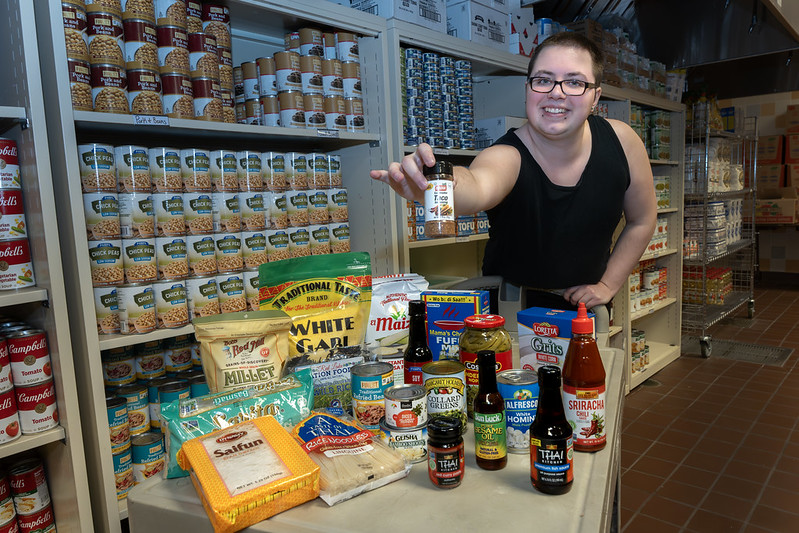
As they prepare for their future, some college students in Minnesota face food insecurity. Reporter Britt Aamodt has the story. Also, a mother is charged after two students overdosed at a Minnesota school and the Duluth City Council moves to support the LGBTQIA2S+ community.
—–Executive Producer: Victor Palomino Producer: Britt AamodtAnchor: Grace Jacobson Reader scripting: Victor Palomino Fact checking: Joel Glaser, Victor Palomino Editorial support: Emily Krumberger Mixing & mastering: Chris Harwood
Transcript
[sound element: NSS intro theme]
HOST: This is North Star Stories: Voices from Where We Live. Today in Minnesota...
ANCHOR: …A mother is charged after two students overdosed at a Minnesota school. Then, as they prepare for their future, some college students in the state face food insecurity, and what's being done about it. And, the Duluth City Council moves to support the LGBTQIA2S+ Community.
I'm Gracie J.
A 39-year-old mother from Cokato, about an hour west of the metro, faces felony charges after her 6-year-old daughter brought psychedelic mushroom chocolate to school, causing two children to suffer severe impairment. Wright County deputies say the girls ate chocolate labeled "Mmelt Magic Mushroom," marked for adults only. Both children were hospitalized. Investigators searching the mother's apartment found meth, fentanyl, and drug paraphernalia within reach of children. She now faces felony charges of drug possession, child endangerment, and storing meth paraphernalia.
In today's main story, as college students returned to class, nearly one in four worry about where their next meal is coming from. Producer Britt Aamodt [rhymes with Comet] looks at the problem of food insecurity on Minnesota's college campuses, and what's being done about it.
Britt Aamodt: This September, tens of thousands of students returned to Minnesota's colleges and universities. Along with juggling rocketing tuition costs and heavy courseloads, some are facing a mostly secret yet ever-present challenge.
David: I definitely noticed how much of an impact inflation had and I pretty much figured that in order to make certain ends meet, that means I needed to intake less calories, or at
least pay for less calories, right?
Britt Aamodt: David, a student at Minneapolis College, a two-year community and technical college, faces
food insecurity.
David: It shouldn't be that hard to get a sandwich. Second Harvest Heartland, a leading Minnesota hunger-relief organization, did a recent survey that showed that one in five households in our state cannot afford the food it needs. But that number is even greater for college students.
Sarah Peterson: It's actually one in four. So that population is experiencing a greater burden of food insecurity than the general population.
Britt Aamodt: Sarah Peterson is director of Kitchen Coalition, Second Harvest Heartland's prepared meals program.
Sarah Peterson: A lot of college students are balancing multiple jobs to make ends meet. They might also be balancing caregiving, parenting responsibilities. So all of these things make it very hard, both to get access to the food they need and, in the case of groceries, being able to prepare that food, which takes time that these students don't have.
Britt Aamodt: This past year, Kitchen Coalition supplied 125,000 meals to its 17 college partners, including
Minneapolis College. They have requests for even more this year. The prepared meals are nutritionally balanced and ready to eat. 1But an increasing number of colleges are also opting to provide traditional food pantries on campus.
Heidi Goettl: Food is one of those things often given up because if students don't pay their rent, they can get evicted. If they don't pay gas, they can't get to college.
Britt Aamodt: Heidi Goettl is director of the Student Resource Center at Minneapolis College. Its food pantry is open every Wednesday, nine to four. This fall semester, the pantry has averaged about 150 visits a week. Students like David can pick up staples—milk, eggs, bread, produce—as well as prepared meals and hygiene items. Even online-only students can use the pantry. For Heidi, food access is not only about meeting a student's immediate need for a meal.
Heidi Goettl: A lack of nutrition, they're not thinking as clearly. They're not able to fully participate in their classes, so it could impact their grades, which leads to financial aid difficulties if they're not passing their classes.
Britt Aamodt: You can donate or get involved, by contacting your local food shelf or Second Harvest Heartland at 2 – the number two – heartland DOT org. This is Britt Aamodt for North Star Stories.
ANCHOR: You are listening to North Star Stories.
The Duluth City Council has passed a resolution recognizing the Duluth-Superior LGBTQIA2S+ community and proposing a new committee to oversee related initiatives. TV station Northern News Now reports that the measure passed 7 to 2 after a lengthy debate, despite concerns about the city's seven-million-dollar budget deficit and a possible tax levy increase. Supporters argue that it will facilitate policy reviews, raise awareness, and combat discrimination.
[sound element: NSS outro theme]
HOST: North Star Stories is produced by AMPERS, diverse radio for Minnesota's communities, with support from the McKnight Foundation and the State of Minnesota. Online at ampers dot org.