
In today’s broadcast: scammers preying on fear about your family’s safety are getting more sophisticated, a statewide LGBTQIA2S+ survey aims to bring current solutions to decades-old issues, and a warning from the Department of Natural Resources for residents up north.
—–Executive Producer: Victor Palomino Producer: Emily Krumberger Anchor: Grace JacobsonReader scripting: Joel GlaserFact checking: Joel Glaser, Victor Palomino Editorial support: Emily Krumberger Mixing & mastering: Chris Harwood
Transcript
[sound element: NSS intro theme]
HOST: You're listening to North Star Stories: Voices from Where We Live, a daily newscast about what it means to live in Minnesota.
ANCHOR: In today's broadcast, scammers preying on fear about your family's safety are getting more sophisticated. Then, a statewide LGBTQIA2S+ survey aims to bring current solutions to decades-old issues. And, a warning from the Department of Natural Resources for residents up north. I'm Gracie J.
It's an old scam with a couple of new twists. Scammers pretending to be a grandchild call an older adult claiming to be in the hospital, jail, or even a foreign country. But officials say scammers have become much more sophisticated. Some are using artificial intelligence so the caller may actually sound like a family member. And, rather than appearing as a private or blocked number, the family member's name shows up on your phone. Experts say you should not talk to the caller. Instead, you should hang up and call the family member immediately to confirm their safety.
Ahead, the Council on LGBTQIA2S+ Minnesotans recently collected data in a community needs survey. Producer Emily Krumberger speaks to one of the survey partners about what policies they would like to see to support queer and trans Minnesotans.
Sean Hayes: in 2014 I finally came to the conclusion that, yes, I am transgender. One of my first sort of wonderings was, am I the only trans person here in Duluth, and what the heck am I going to do?
[sound element: NSS music bed]
Emily Krumberger: Sean Hayes is the the co-founder and Executive Director of TransNorthland, a Duluth-based organization that provides resources, support and social opportunities for the transgender community.
Sean Hayes: I think I've always had a deep heart for connection in community, and so I started putting feelers out.
Emily Krumberger: Months later, Sean met up with members of the Lake Superior Transgender Group. With his help, the group grew and expanded into TransNorthland. Today, Sean says that the community's needs
Sean Hayes: come down to, you know, sort of the basics. A safe place to live. So, trying to find landlords they can rent from who aren't going to evict them for being trans, or employment is another big one. And gender affirming healthcare.
SFX of door opening and unlocking, footsteps going up stairs
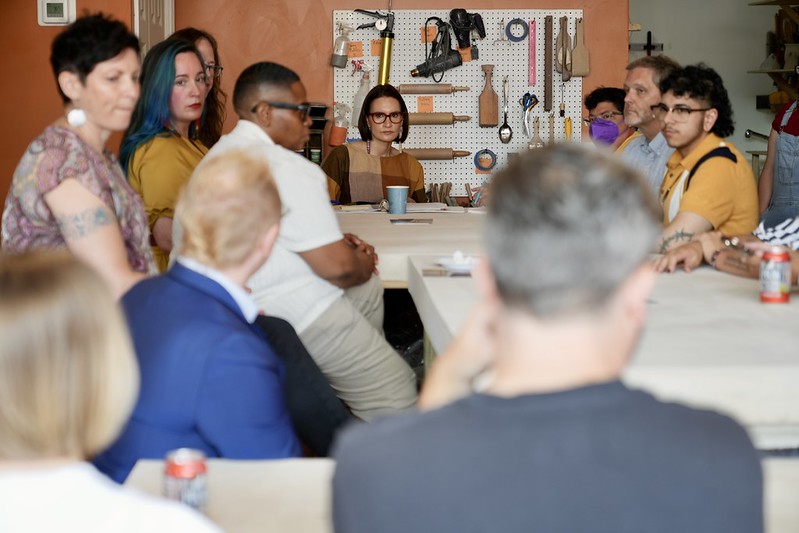
Emily Krumberger: To accurately assess the needs of trans and queer residents, the Council on LGBTQIA2S+ Minnesotans launched a statewide survey earlier this summer. TransNorthland was one of the community partners of the survey.
Emma Watts: From the get go, we knew how we wanted this data to figure out where we as a state could improve.
Emily Krumberger: Emma Watts is the Council's Executive Director. She says that the council, which was started in 2023, exists because
Emma Watts: Thirty years ago, the state conducted a LGBTQ kind of needs assessment a little bit different from what we're doing now, but they did statewide interviews and listening sessions and they recommended that there be a statewide Council on LGBT Minnesotans.
SFX of people talking (listening session)
Emily Krumberger: The Council's members - 4 state legislators and up to 12 public seats - appointed by the Governor - will be the ones to help determine how to use the survey's data to benefit the community. Specifically,
Emma Watts: where we might need to invest more dollars, and where the state is involved versus where it's a community advocate solution. A lot of these recommendations will ultimately take the form of a bill.
Emily Krumberger: Community partners will also be involved in recommending solutions
Sean Hayes: My main hope
Emily Krumberger: Sean Hayes, again
Sean Hayes: is that we'll have maybe two to three key areas that our state, will then choose to fund. And then creating some type of policies that would enforce non discrimination, whether it's from landlords or doctors.
Heather Thronvold: You know, a lot of trans people delay or just don't go and seek medical care because they are worried about what's going to happen with the provider.
Emily Krumberger: Heather Thronvold is TransNorthland's Board Chair and has a background in healthcare.
Heather Thronvold: That's one thing that I want to see come out of this.
[sound element: NSS music bed]
Emily Krumberger: More information can be found at mn.gov/lgbtqia2s and transnorthland.org. For North Star Stories, I'm Emily Krumberger.
ANCHOR: You are listening to North Star Stories.
The Minnesota Department of Natural Resources, or DNR, is asking residents impacted by the strong storms earlier this summer to compost rather than burn wood and brush from downed trees. The DNR says yard debris burns are the number one cause of wildfires in Minnesota. The agency says if you insist on burning the debris, you should wait until winter to do so. The snow cover will keep the fire from spreading. Officials say green branches also create smoky conditions and have a higher chance of reigniting later, leading to accidental fires.
[sound element: NSS outro theme]
HOST: North Star Stories is produced by AMPERS, diverse radio for Minnesota's communities, with support from the McKnight Foundation and the State of Minnesota. Online at ampers dot org.