
In today’s broadcast, measles cases in the U.S. are on the rise. Then, a new law every driver in Minnesota needs to know about. And, controversy surrounding a transgender softball player from our state sparks nationwide attention.
Transcript
[sound element: NSS intro theme]
HOST: You're listening to North Star Stories: Voices from Where We Live, a daily newscast about what it means to live in Minnesota.
ANCHOR: In today's broadcast, measles cases in the U.S. are on the rise. Then, a new law every driver in Minnesota needs to know about. And, controversy surrounding a transgender softball player from our state sparks nationwide attention.
I'm Chantel SinGs.
Measles cases are on the rise across the country, including here in Minnesota. Officials say so far this year, there have been about 12-hundred reported cases in the U.S., a dramatic increase from the 285 cases last year, nearly quadrupling the annual total, and we're only halfway through the year. Three people have died from the disease. Minnesota has had five confirmed cases this year. Officials say most of the measles cases are among people who have not received a vaccine. The Centers for Disease Control says vaccines are still the best way to prevent measles.
Ahead, a new lane-sharing law for motorcyclists is going into effect on July 1. Reporter Kylie Kendall has what all Minnesota motorists need to know.
Jay Block: If you put the word motorcycle and safety in the same sentence, I'm going to listen
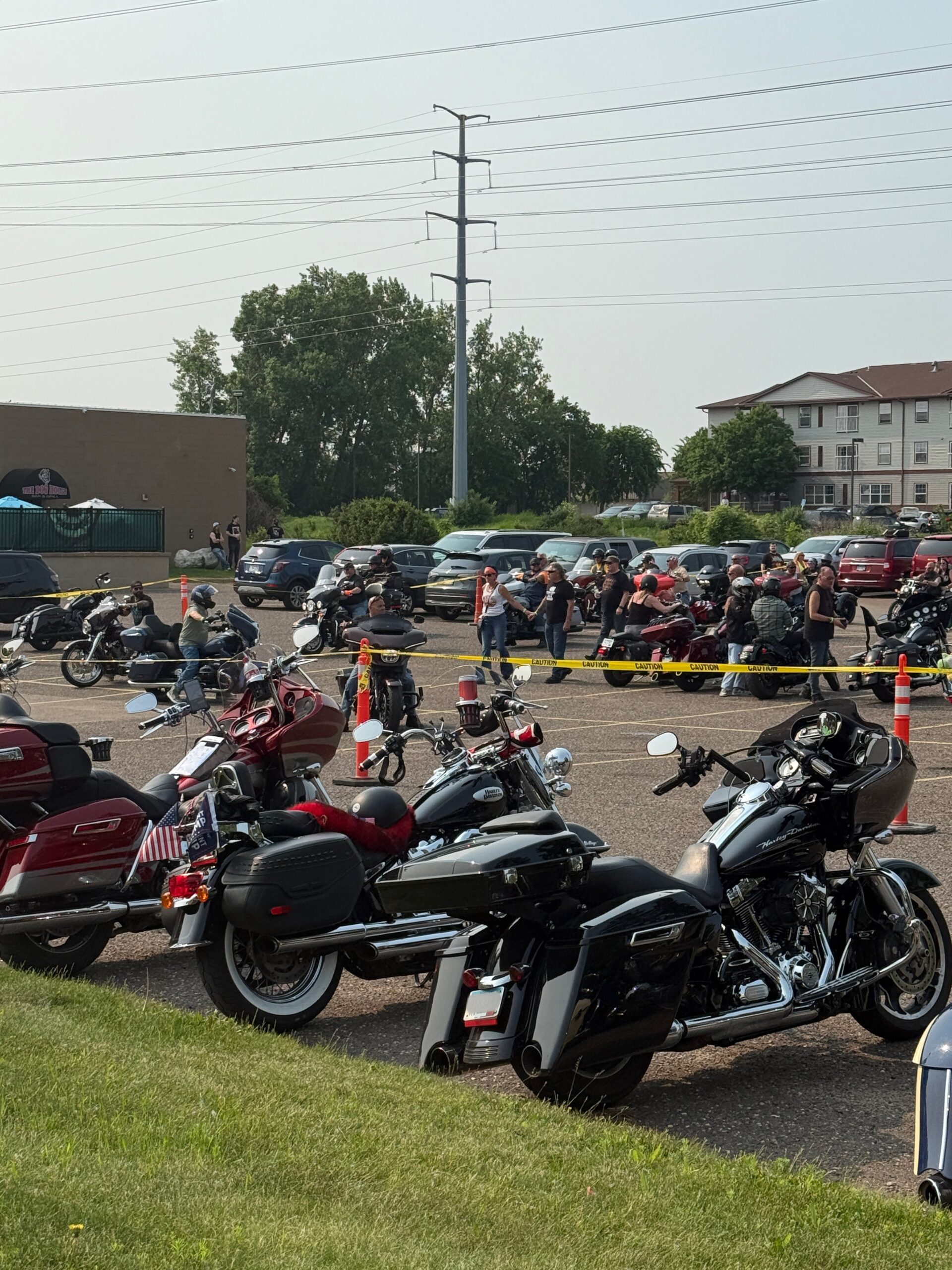
Kylie Kendall: Motorcycles in Minnesota will soon be able to share traffic lanes with other vehicles during traffic jams. Lane sharing, which includes lane splitting and filtering, will become legal for motorcyclists on July 1. Jay Block, Minnesota's Motorcycle Safety Administrator, helps explain exactly what Minnesota drivers should expect.
Jay Block: Lane filtering and splitting are the same in the sense that the motorcycle in Minnesota anyway is traveling between lanes of traffic with two lanes going in the same direction.
Kylie Kendall: The key differences between the two are the movement of traffic and how fast the motorcyclist can go. Splitting is when traffic is moving.
Jay Block: If you're doing the splitting, it's no more than 25 miles an hour. So if traffic is moving, it's 25.
Kylie Kendall: And filtering is when traffic is fully stopped.
Jay Block: You know, the filtering is a 15 mile an hour permission. So if traffic is stopped, the motorcyclist cannot exceed 15 miles an hour.
Kylie Kendall: Motorcyclists can only split or filter if traffic is moving at 25 miles per hour or slower. Any faster, and the motorcyclist must get back into a lane.
Jay Block: It's not intended for this to be used at highway speeds going in between traffic at, you know, 30, 35, 40 or higher miles per hour. That's not the intent of this.
Kylie Kendall: Motorcyclists also cannot drive on the outside of lanes or vehicles, only in between. They cannot ride on the middle white line either but have to be sharing the lane. This new law is a big step in the ongoing conversation about motorcycle safety in Minnesota. Block said that since motorcycles don't have the same protections as cars, and traffic jams are such tight spaces to navigate, this law will help prevent motorcycles from getting rear ended.
Jay Block: So this takes them out of that and puts them into a safer position, navigating lanes to take them away from the end of the line.
Kylie Kendall: But not every motorcyclist agrees.
David Wojnar: I think safety is an excuse to do it.
Kylie Kendall: David Wojnar, a Minnesota motorcyclist, doesn't think the new law will help with safety.
David Wojnar: I know they do it in California, and it works for them down there. I think it's, in my opinion, as a motorcyclist, I think it's dangerous to do.
Kylie Kendall: Wojnar said he knows a lot of motorcyclists who lane share right now, even though it's not legal yet, and he doesn't agree with it.
David Wojnar: I think anything can happen, from somebody quick throwing a door open to throw a cigarette out, or because they're going to get sick, or anything.
Kylie Kendall: Nonetheless, lane sharing will be legal on July 1. Jay Block said he's preaching one thing to all Minnesota drivers: Patience.
Jay Block: Take your time, make sure you have the room and the space to be able to do this safely.
Kylie Kendall: For more information about the upcoming law on July 1, you can visit the Minnesota Department of Public Safety website. This is Kylie Kendall for North Star Stories.
ANCHOR: You are listening to North Star Stories.
A trans softball player from Minnesota is sparking a social media debate that's generated millions of views. It began with a post from Riley Gaines calling the high schooler a boy. Gaines is a former division one swimmer who's now an anti-trans activist. Well-known Olympian Simone Biles responded, accusing Gaines of bullying. Their exchange comes a few months after the Trump administration threatened to pull funding from schools that allow transgender girls to compete. Biles has since apologized for her comments but also said kids shouldn't be targeted for what she called a "flawed system."
[sound element: NSS outro theme]
HOST: North Star Stories is produced by AMPERS, diverse radio for Minnesota's communities, with support from the McKnight Foundation and the State of Minnesota. Online at ampers dot org.