
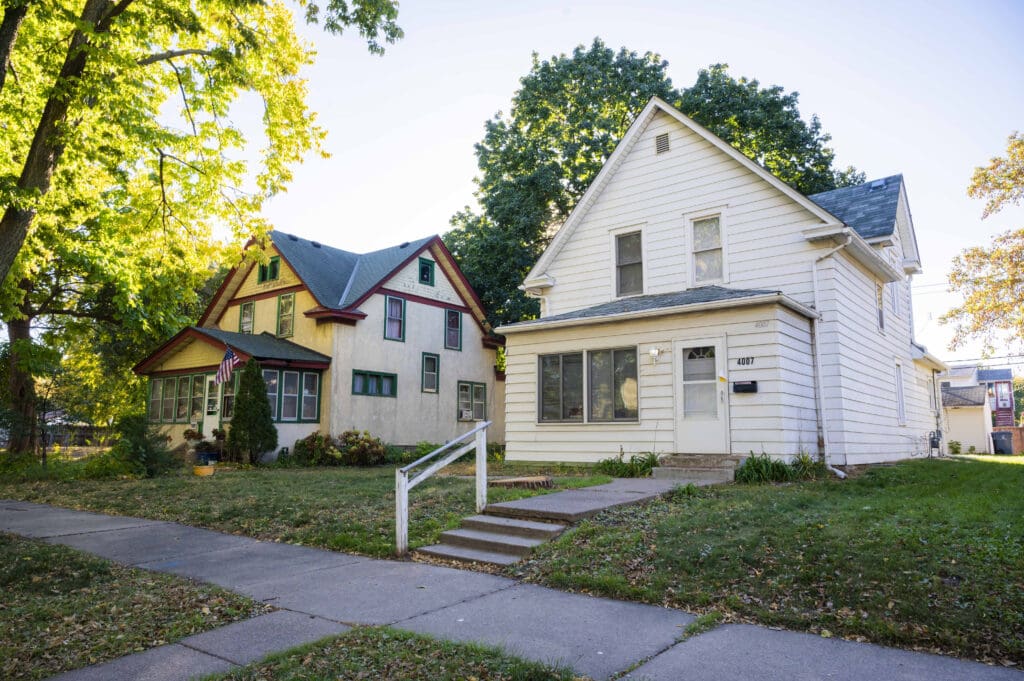
Together, a Twin Cities-based non-profit and a national organization have purchased 345 single family homes in the Twin Cities metro area in hopes of reshaping the landscape of affordable housing. Also, The US Supreme court ruled against the EPA’s authority to enforce pollution permits under the Clean Water Act.
Transcript
HOST: You are listening to North Star Stories - voices from where we live - a daily newscast about what it means to live in Minnesota.
ANCHOR: Today, metro area nonprofits are creating solutions for affordable housing, plus, the United States Supreme Court ruled 5-4 against the Environmental Protection Agency’s authority to enforce pollution permits.
ANCHOR: I’m Chantel SinGs.
ANCHOR: Earlier this month, the United States Supreme Court ruled 5-4 against the Environmental Protection Agency’s authority to enforce pollution permits under the Clean Water Act. These permits are intended to prevent sewage build up in public water. The court ruled in favor of the city of San Francisco, which challenged the EPA’s “narrative” wastewater permits. The city argued that the agency needed to provide more specific limitations to Clean Water Act permit holders. According to EPA principal deputy general counsel Kevin Minoli. “Narrative” permits are utilized as a second measure of safety when the amount of discharge allowed still produces hazardous water quality. Business groups, such as the national mining association and the us chamber of commerce, submitted amicus briefs in support of San Francisco’s position.
ANCHOR: In other news, nonprofits in the metro area are working to find solutions for creating affordable housing. Reporter Katharine Decelle has the story.
Katharine DeCelle: A new initiative in the Twin Cities is hoping to reshape the landscape of affordable housing. A Twin Cities-based non-profit Brick by Brick and a national organization, the Housing Partnership Network, have purchased 345 single family homes in the Twin Cities metro area. These will soon transition into community land trusts. This work is being done in partnership with Grounded Solutions, a national community land trust. Devin Culbertson, Vice President of innovative Finance at grounded Solutions Network, says:
Devin Culbertson: This initiative is really focused on taking philanthropic and mission-driven capital, and using that to acquire single family rental homes in select markets and ultimately transition those into community land trust to create ownership opportunities and stability for middle income families.
Katharine DeCelle: Community land trusts allow individuals to buy homes at a discounted price while maintaining ownership of the land. Devin explains that new owners of a community land trust home will:
Devin Culbertson: Have full ownership rights and responsibilities of home ownership, but they agree to sell that home at a discount to the next buyer.
Katharine DeCelle: Of the 345 homes purchased in the Twin Cities, Devin says:
Devin Culbertson: Some of them came to us occupied and pretty close to sale ready, some of them vacant. Some of them came to us occupied with folks that had been there for 10 years. And so we're talking to those folks about their interest in buying those homes directly.
Katharine DeCelle: Akilah Watkins-Butler is the former Board Chair of Grounded Solutions Network, and she expressed her hopes for the initiative on a YouTube video on the organization's website.
Akilah Watkins-Butler: My hope is that not only does it grow in its ability to impact families and grow in the many cities across this country, but that it also attracts many more people of color as actual homeowners.
Katharine DeCelle: According to data from the Minnesota Housing Partnership, racial inequities in Minnesota rank among the highest in the country. While 77% of white households in Minnesota are homeowners, the rates for other racial groups are significantly lower. Only 29% of black households in the state own their homes.
Akilah Watkins-Butler: There is such a huge housing need. There's so many families that with this type of assistance that Shared Equity provides, we can begin to change and see and make a dent in the historical discriminatory wrongs of the past.
Katharine DeCelle: By putting these properties in the hands of nonprofit organizations, Grounded Solutions and its partners are not just restoring houses, they're hoping to revitalize neighborhoods and build wealth, providing a blueprint for affordable housing in other cities across the nation. For North Star Stories, I'm Katharine DeCelle.
HOST: North Star Stories is produced by AMPERS - Diverse Radio for Minnesota's Communities - with support from the McKnight Foundation and the State of Minnesota. Online at AMPERS dot ORG.